Happy Spring equinox

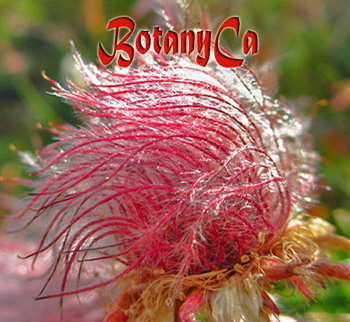
Today we welcome the astronomical spring in the Northern Hemisphere, even if it doesn’t look like it in our region. However, the few early flowers and the colourful buds of Helleborus and Hepatica agree with the announcement (Hepatica transsilvanica flower bud in the top image).
So, we are getting ready, transplanting seedlings and maybe even sowing some annuals.
I will add a bit more info about the transplanting subject for now.
We try to grow many different perennials species, and there are situations when the most common rules for pricking out don’t apply. It is disheartening to have a nice germinating pot with seedlings only to lose them when transplanting.
 I will emphasize today the case of tiny seedlings with extremely long and often unbranched roots. They are characteristic of small size alpine species that grow in harsh environments.
Most such seedlings will develop very long, thin roots in search for good conditions, soil and water wise, and to anchor themselves well into the ground.
Most often these are species that can be found in the wild growing on thin substrates, among rocks and crevices. The thin, long roots can squeeze themselves into the thinnest cracks of the rocks. 
I will use as an example Erigeron vagus (Rambling fleabane)* sown this year. Notice the low size seedlings, maybe 0,5 cm tall (left) by comparison to the roots, which are already tangled at the bottom of the sowing pot (right image).
Many alpine species are in fact easy to germinate but they are difficult to handle later at the seedlings stage. It is best to watch closely the bottom of the top and if you see roots protruding, it is time to transplant them no matter of the size of seedlings above the ground. Even so, sometimes the fine, long roots are already circling at the bottom of pots, which is not ideal (ideal would be to transplant very tiny seedlings soon after germination, but that is also difficult).
Skipping the transplanting and planting the whole sowing pot in the rockery is not a good option in this case. So, we have to give it a try even at this stage.
As I mentioned in another post, let the pot dry out before transplanting; the roots will break more easily if the mix is too wet (and heavy).
Then, gently separated some of the seedlings (inevitably we will lose some of the roots and seedlings in the process). Plant 2-3 seedlings together/pot (in case some won’t make it). Here are the seedlings after one week. With care and patience, we can succeed! *Erigeron vagus – the seeds were received from a seeds exchange, so I keep the name. It is an Erigeron for sure but remains to be seen after flowering if it is truly E. vagus.