




This site uses cookies. By continuing to browse the site, you are agreeing to our use of cookies. See our Privacy policy.
OKWe may request cookies to be set on your device. We use cookies to let us know when you visit our websites, how you interact with us, to enrich your user experience, and to customize your relationship with our website.
Click on the different category headings to find out more. You can also change some of your preferences. Note that blocking some types of cookies may impact your experience on our websites and the services we are able to offer.
These cookies are strictly necessary to provide you with services available through our website and to use some of its features.
Because these cookies are strictly necessary to deliver the website, refusing them will have impact how our site functions. You always can block or delete cookies by changing your browser settings and force blocking all cookies on this website. But this will always prompt you to accept/refuse cookies when revisiting our site.
We fully respect if you want to refuse cookies but to avoid asking you again and again kindly allow us to store a cookie for that. You are free to opt out any time or opt in for other cookies to get a better experience. If you refuse cookies we will remove all set cookies in our domain.
We provide you with a list of stored cookies on your computer in our domain so you can check what we stored. Due to security reasons we are not able to show or modify cookies from other domains. You can check these in your browser security settings.
These cookies collect information that is used either in aggregate form to help us understand how our website is being used or how effective our marketing campaigns are, or to help us customize our website and application for you in order to enhance your experience.
If you do not want that we track your visit to our site you can disable tracking in your browser here:
We also use different external services like Google Webfonts, Google Maps, and external Video providers. Since these providers may collect personal data like your IP address we allow you to block them here. Please be aware that this might heavily reduce the functionality and appearance of our site. Changes will take effect once you reload the page.
Google Webfont Settings:
Google Map Settings:
Google reCaptcha Settings:
Vimeo and Youtube video embeds:
The following cookies are also needed - You can choose if you want to allow them:
Results on Rubus chamaemorus germination – update 2 and 3
Propagation, Wildflowers of North AmericaFor those who didn’t follow the story from the beginning, please see these links:
Homework for today: Rubus chamaemorus germination – December, 2019
Preliminary results on Rubus chamaemorus germination – update 1 (Jan. 10, 2020)
Lot#2 has been eliminated (the seeds were damaged during the endocarp removal).
Lot#1 – the first signs of germination appeared pretty fast, with the radicle emerging first, in most cases.
A few seeds were also discarded, but almost all the remaining ones showed signs of germination (radicle growth and greening of cotyledons).
The container/and the pot with transplanted germinated seeds have been kept under light at +/- 20C.
Rubus chamaemorus seeds starting to germinate, Jan 19
Rubus chamaemorus germinated seed
The main aim of the experiment was to see if the seeds indeed germinate at warm/room temperature, and they do.
But excising the seeds from the pyrenes is not an easy job and many will get damaged during the process. Especially for large lots of fruits, it is a completely unpractical method.
Rubus chamaemorus pyrenes: hwt x 3 times, placed at warm/light
Another attempt is being made by using a hot water treatment (hwt) on the pyrenes. The hot water treatment gave excellent results last year for replacing the mechanical scarification usually employed for Fabaceae seeds.
Lot#3 was treated with boiling water 3 times, one day after another starting on Jan. 16, and then placed in the same conditions like lot#2. We’ll see if the treatment was enough to produce fissures in the endocarps and allow germination without extracting the seeds.
Update will follow.
Recap:
If Rubus chamaemorus fruits are sowed, they require 270 days of cold/moist stratification in order for the endocarp to broke down and allow the seeds to germinate. Translation: for fruits sowing in late fall, expect some germination in the third spring after sowing.
If you manage to remove the endocarps without damaging the seeds, they will germinate quite fast at warm (room temp.)/light.
Update 3 – regarding germination trials out (2021):
First, because I had a question about it: what went wrong with excising the seeds from within the pyrenes?
The problem was that using a very sharp scalpel, the seeds were damaged while cutting through the pericarp. Microscopic cuts or punctures led to the damage of the seeds and embryos.
Unless one is a surgeon, I don’t see it as a feasible method, even if the few unharmed seeds did try to germinate.
So, in early spring of 2021 I went back to a classical method of scarification used by plant nurseries for this type of ‘seeds’ by using sulphuric acid. This is not something that can be applied at home and I don’t know if it is much in use in the nurseries nowadays; out of curiosity I had to give it a try.
One lot of seeds was treated with sulphuric acid for 45 min and another one for 1 h.
Rubus chamaemorus pyrenes – H2SO4 treatment in April 2021, kept in Petri dish on moist towel; picture taken Sept. 12/2021
Afterwards, the ‘seeds’ were kept under lights at room temperature, and… nothing happened. Some seeds seem a bit enlarged but obviously the time wasn’t enough for the endocarp to be eroded enough in order to allow water imbibition.
Later on I found one study suggesting a 3h treatment with sulphuric acid; maybe I will try it this coming winter.
Also, another more friendly method, like nicking, was also tried with no success.
Then I left a sample of pyrenes sitting in water since March! I thought that some may give in and imbibe but it didn’t happen.
Rubus chamaemorus pyrenes – after receiving hot water treatment x 3 times in spring 2021, then kept in water (regularly changed); picture taken Sept.12/2021
Conclusion: for home gardeners sowing as usual and patience may provide the best outcome in regards to germination of this species. Repeated cycles of warm/cold/warm/cold are necessary for the endocarp to broke down and allow water imbibition of the seeds and start the germination process.
Friday’s Seeds: Rosaceae on the wind
Friday's Seed(s), Propagation“All the flowers of all the tomorrows are in the seeds of today” – with this being said (I don’t remember by whom), the Friday’s seeds series starts again. Rosa family is extremely large and diverse, with many ornamental species. Equally diverse are the fruits and seeds.
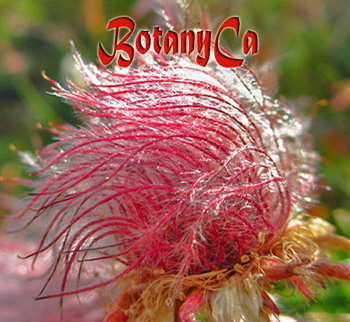
Apart from the well-known species with fleshy fruits many are familiar with, many others have dry fruits, of which some are adapted for wind dispersal. For this purpose, the styles remain attached to the fruit and begin to elongate after pollination; they also develop hairs in various amounts and many times the fluffy ‘seed-heads’ are nice additional ornamental features. The featured image shows the alpine Geum reptans with developing fruit-heads.
What we usually ‘seed’ is actually the fruit, which is an achene; inside it holds one seed. Few examples:
This year good fortune made it that we can compare two mountain avens species: Dryas octopetala and Dryas oxyodonta seeds.
Dryas octopetala seeds
Dryas oxyodonta seeds
Also, we can have a look at the Aleutian avens, Sierversia pentapetala seeds (syn. Dryas pentapetala).
Sieversia pentapetala seeds (syn. Dryas pentapetala)
The genus Geum contains a lot of species cultivated in the gardens. It would be hard to distinguish them after the ‘seeds’ but we can at least define the genus.
Geum triflorum (Prairie smoke) and Geum rivale (Nodding avens) shown.
Geum triflorum seeds
Geum rivale seeds
And, finally, something like a Geum on steroids if someone cares to google for plant pictures: Woronovia speciosa.
Woronovia speciosa
Drya octopetala
Sieversia pentapetala
Geum triflorum in June
Geum rivale
Blue-eyes Wednesday
Propagation, Wildflowers of North AmericaThe June garden review (in progress) it is a good occasion to update the info on Sisyrinchium mucronatum (Slender blue-eyed grass).
Seeds offered as S. montanum for a couple of years were probably a mixture of both species (please see the note on the S. montanum page).
When the light blue, delicate flowers start swaying atop of the grassy leaved tight clump in June, I always wonder why we don’t cultivate more the blue-eyed grass species.
Besides their beauty, all are super cold hardy, pollinator friendly, not requiring a lot of space and good companions to other native and non-native species.
Close to S. mucronatum I grow Primula mistassinica, Parnasia glauca, Viola nephrophylla; last summer were added young plants of Zigadenus elegans and Prenanthes racemosa. Any other species preferring a slightly moist location (even temporarily flooded) in full sun to part-shade, would be good companions.
Sisyrinchium mucronatum (Slender blue-eyed grass) flowering in June
Preliminary results on Rubus chamaemorus germination – update 1
Friday's Seed(s), Propagation, Wildflowers of North AmericaJanuary 10, 2020
The first post on R. chamaemorus (December 2019): HERE
First, a simple, short presentation of the Rubus fruit so that we understand the photos. The fruit is an aggregate of drupes. Each drupe presents a fleshy part (intended as a reward for dispersers) and a ‘pyrene’ in which the seed is protected by the hard fruit endocarp similar to the peach stone. Inside the pyrene, there is a seed covered by a thin seedcoat.
The embryo in Rubus species is fully formed, showing a small radicle and two large cotyledons.
Rubus chamaemorus pyrene
The endocarp of the pyrene is very hard, reason for the difficulties in germinating the seeds.
We shall see how to remove it in a simple way and determine if the seeds germinate at warm or need a cold period, to clarify the contradictory existent sources. I realize now that this may be due to the fact that some people tried to germinate the pyrenes while others tried the actual seeds!
When sowing the pyrenes, 270 days of cold/moist stratification are said to be required for germination, meaning 2 years (Baskin & Baskin).
Two lots of pyrenes were used.
Lot#1 was soaked in water since Dec. 18, with the water changed once in a while.
Lot#2 was soaked and also treated with hot water twice at interval of one week (see the ‘hot water treatment’ post).
I sectioned the first few pyrenes last week just to see how it goes, but the germination experiment was started only two days ago; that means about 3 weeks of soaking in water.
The endocarps were removed with a scalpel under a magnifying lamp. The easy way to remove them is by making a small section on the curved side of the pyrene, towards the rounded end. This way you avoid damaging the embryo radicle, which is at the opposite end.
Rubus chamaemorus; pyrenes showing where to section to remove the endocarp
Despite the recommendation of the article presented in the first post, I find no need for nicking the seedcoat, which is very thin and sometimes even slides out easily (especially in lot #2).
Findings: the pyrenes treated with hot water were definitely easier to cut than the ones only soaked in water. For lot# 2 some of the seeds were already soft, a sign that the soaking time was too long. It is clear that the hot water treatment is very effective, leading to fine fissures in the endocarp. The soaking time should be reduced a bit, maybe at two weeks.
After removing the endocarps, the seeds were placed right away in containers (with lids) prepared with a layer of moist vermiculite and a coffee filter on top; this will allow for easy observation. I borrowed the idea from a friend who used it for stratification of seeds in the fridge.
The seeds (some still with half of the endocarp) and the embryos are sitting on top of the coffee filter, which can be easily replaced in case some of them develop mold (quite possible)
Considering the aspect of lot#2 of pyrenes and seeds, I wonder if the hot water treatment (done a bit differently) may not be enough to allow the seeds to germinate (?). I still have a small lot of pyrenes and will start one more treatment right away.
Removing the endocarps is not a practical solution for large scale sowing, plus other Rubus species (all with hard endocarps) have very small pyrenes.
So, until the next update – let’s have the kettle going!
Special thanks: to Trond Hoy for providing the bakeapple seeds and to Keith Baldie for sharing with me his method of stratification.
Practical considerations for sowing in late fall and winter
PropagationFor those who don’t know it yet…the devil is in the details, sometimes.
Sowing in late fall – early winter: what is different than fall sowing?
Most important is to consider that seeds must enter the cold cycle well imbibed with water. When sowing in late fall when temperatures are still well above freezing, this is not a problem. By the time the cold arrives (meaning temperatures around 0C and below), the seeds have already soaked a lot of water and will enter the cold stratification well prepared.
But when sowing in late fall (November) and advancing into the winter, even if the pots are well watered, the seeds may not be able to absorb the water fast enough when they are placed right away outdoors.
For this reason it is best to keep the new pots with sowings indoors for about 2-3 (4)weeks, and move them outdoors in the cold after that. It can also happen that some seeds will germinate, even when known to be cold germinators!
The same concept applies if you want to start the cold/moist stratification in the fridge.
Place the seeds in the moist medium of your choice (vermiculite, sand or wet towels) and keep them at room temperature first for a few days, before placing them in the fridge. You will be surprised by the change most seeds will undergo while absorbing water in only a few days.
I can exemplify with Fritillaria and Tulipa seeds that I plan to grow under lights indoors this year (2020). In this purpose I kept them at room temp. for about a week before placing them in the fridge; in some cases the embryos are already visible (hover the mouse for names).
Tulipa tschimganica seeds
Fritillaria latifolia seeds
Talking about stratifying seeds in the fridge, please consider first what species you want to germinate. Most of them germinate best when sowed and placed outdoors for the winter.
In the case of species known to require low temperatures for dormancy breaking (like various Gentiana, Saxifraga, most Ranunculaceae), stratification in the fridge at +/-4C is not a good option (unless you have a fridge dedicated to seeds and can vary the temp.).
True that in case of a mild winter seeds may not germinate in the first spring, even if sowed outdoors! Breaking the dormancy requires temperatures below zero for various periods of time, and if specific cold period requirements are not satisfied in the first winter, the seeds will need an additional cold cycle to germinate. In this latter case, keep your pots and take care of them until the second spring.
Talking moist packed seeds: a reminder that these seeds are in full development by late fall (their warm cycle completed and the cold one started), and in some cases there may be signs that the radicles are just about to emerge (classic examples: Asarum canadense, Trillium grandiflorum…).
The moist packed seeds require a cold cycle for breaking the shoots dormancy at this point, so they should be sown asap and placed outdoors. The best option is to use a cold frame, a cold garage, or in absence of these options bundle the pots together and fingers crossed for snow (alternatively, cover the pots with a thermal fleece, tarps, in case it gets very cold with no snow cover).
To finish about spring Corydalis
PropagationBefore the year’s end, here’s a bit more about Corydalis solida and the likes (other tuberous species).
This is probably a repeat of what I have previously mentioned, but it is good to recap.
Corydalis solida and the likes (C. caucasica, C. cava, C. malkensis…) are promiscuous species, cross-pollinating freely, which means that growing them from seeds, there is no guarantee you will obtain the same form as the mother plant. But precisely in this ‘flaw’ I find their beauty because interesting forms can appear naturally; all one has to do is pay attention and select them.
A beautiful form of Corydalis caucasica ex. ‘Alba’.
Corydalis caucasica ex. ‘Alba’
Two other C. solida seedlings I am ‘watching’: a deep red one and a red with pink lips (most likely a cross from ‘Beth Evans’).
C. solida seedling1
C. solida seedling2
Nothing is easier than growing this type of Corydalis from seeds. The seeds are ready toward the end of May, and if you want to actively increase your stock, it is best to collect them; otherwise, the ants will carry them maybe in places where not all the seeds can germinate.
Fresh sown seeds will promptly germinate in the following spring (after a warm/cold cycle), grow for few months and then go dormant. My method is now to grow them in the same pot for 2 years and at the end of the second cycle to plant the small tubers in the ground (June/July).
In most cases, the first flowers will appear in the third year.
Corydalis solida- 1 and 2 years seedlings
Corydalis young tubers
Corydalis solida old tubers
Older tubers can be dug up and moved in the summer after the plants have gone dormant; part-shaded locations which do not dry completely in the summer are best.
Happy Corydalis growing!
Aconitum germination revised: 2019
Plant portraits, PropagationIt may become a tradition to publish revised notes on Aconitum germination around Christmas time every year; it only depends if new species will be available for trial-outs! My thanks to those making this study possible. Read HERE the starting notes on Aconitum germination.
Again, Aconitum comprises many species which are (in general) difficulty to germinate if the seeds were stored dry, some even after short periods of dry storing. But some species are more recalcitrant than others, and that’s what this study tries to looks at, including the effect of GA3 on improving the germination.
These are the main germination tables revised, Dec. 2019
The conclusion from last winter sowings is that Aconitum moldavicum and Aconitum hemsleyanum are difficult to germinate species even after a relatively short period of storing the seeds dry. It remains to be seen if some of the seeds will germinate in the second spring after sowing.
Aconitum kusnezoffii seedlings
Aconitum krylowii seedlings
Aconitum kirinense seedlings (2)
Aconitum kusnezoffii seedlings (2)
From the recently sown species there are moist packed seeds to share of Aconitum japonicum
Hepatica acutiloba pastel mix – seeds are starting to germinate! Together with the Aconitum they can be ordered via – Fast shipping option.
Shipping will resume after Dec. 26
Merry Christmas to all!
Homework for today: Rubus chamaemorus germination
Propagation, Wildflowers of North AmericaRecently I exchanged few words about the Rubus chamaemorus (bakeapple) with someone who purchased seeds. While reading again a short but quite explicit article on the subject, I thought it would be good to do a little experiment of my own.
Although it needs a specialized habitat to grow well, R. chamaemorus is a desirable species; unfortunately difficult to germinate due to the very hard endocarp (the ‘seeds’ are actually pyrenes ;).
Today I had to pack seeds again and it was the perfect occasion: I counted two lots of pyrenes for the experiment. I intend to soak one lot as usual in water and for the other one I’ll use the ‘hot water’ treatment to see if it makes it easier to remove the endocarp.
I will update this post along the experiment, but until then anyone interested can do a bit of homework:
GERMINATION STUDIES OF BAKEAPPLE (CLOUDBERRY) SEEDS – cjps79-010
Other studies also suggests removing of the endocarp to obtain germination but there are contradictory reports about the germination temperature.
Kernera and a trick for sowing fine seeds
Plant portraits, PropagationFew species with small size seeds
Talking alpines species which usually have fine seeds, I will show a trick for sowing.
As everyone knows, fine seeds require light for germination and they need to be covered lightly; perlite is a good material choice, easy to find at almost any garden centre. Another good option it is to use vermiculite.
But not only I cover the seeds with perlite or vermiculite, I also lay a fine perlite layer on top of the sowing mix and water it lightly before spreading the seeds; this way the seeds will stick to the perlite and not get drawn deep into the mix ;) You can also use vermiculite in the same way.
I would say this is very important for warm germinators. For cold germinators, which will receive their cold/moist stratification outdoors, the light requirement is often replaced by the cold treatment, so you can use regular sowing mix for covering.
Saxifraga corymbosa seeds sowing
Light sensitive seeds sowing
Especially when placed outdoors for cold/moist stratification it is good to enclose the pots in a plastic bag/Ziploc/or plastic boxes. The small seeds are easily displaced because of the superficial mix covering and starting spring with the raise in temperatures, they can also dry out very fast; even a short period of dryness can be fatal if it happens at the exact moment of the germination start.
About Kernera saxatilis, or to use the common French name which is very suggestive: Kernéra des rochers.
This lovely rock garden species offered in the seeds-gift is hailing from mountain ranges of Southern and Central Europe. Generally it is overlooked by many and I feel I should promote it more.
You can find a nook for this delicate species in any rockery, big or small, trough, containers or any other planting holders. The small white flowers will appear on an elongated flower stems in the spring, and will be followed by ornamental beads-like fruits.
Kernera saxatilis flowers
Kernera saxatilis garden
Kernera saxatilis fruits
Kernera saxatilis seeds
It gets even better because the leaves rosettes remain evergreen, a most desirable trait in any cold climate – pictured here in November 30th.
Kernera saxatilis leaves rosettes end of November; these are still young plants which will increase in size over the years.
Did I mention that this is a very easy to germinate and grow plant?
Pink
Plant portraits, PropagationFrilly pink with the long gone fragrance of June summer days – sounds about right for Wednesday.
Have a great one everyone!
Dianthus superbus ssp. sajanense
Colors for a white week: Acinos
Alpine plants, Plant portraits, PropagationIt seems that we will have a white week. But it is so easy to make it flower-colorful!
Since Acinos alpinus seeds were packed for few last orders I thought “A” + purple would be perfect for Monday; plus, we can feel the high altitude summer sun!
Acinos alpinus (syn. Calamintha alpina) – an easy to grow species in a rock garden, edge of a flower border; sun and good drainage.
Acinos alpinus – go wild and combine it with any other color!
Gentiana for a rainy day
Alpine plants, PropagationWhat else better for a grey November day than a Gentiana?
The Gentiana and allies category has been updated. Few species are out this year and one notable species has just been added. No gentiana lover would wanGentiana for a rainy dayt to miss Gentiana uniflora, the Far Eastern counterpart of Gentiana verna (in the top featured image).
But all other Gentiana species are worth growing: Gentiana dahurica, G. septemfida collected in the garden or Gentiana asclepiadea, Gentiana lutea and G. punctata collected in the Alps this year, thank you!, not to mention their relative Swertia perennis. There are never enough Gentiana!
Gentiana dahurica
Gentiana septemfida var. lagodechiana
Gentiana lutea
Gentiana asclepiadea
Gentiana punctata