• Cart
  • Checkout
  • Shopping Cart Shopping Cart
    0Shopping Cart
Botanically Inclined - Seed Adventures
  • BASE CAMP
  • BLOG
  • Hepatica
    • Notes on Hepatica acutiloba
    • Notes on Hepatica americana
    • Named forms and collection numbers
    • Hepatica: Intermediate forms and cf. designation
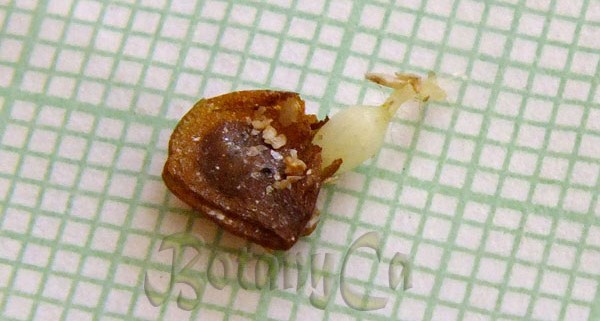
    • Hepatica: Pollination, seeds & germination
    • Transplanting and caring for Hepatica seedlings
  • SEEDS SHOP
  • The Seeds Library
    • Caryophyllaceae
    • Liliaceae
    • Gentianaceae
    • Ranunculaceae
    • Orobanchaceae
    • Iridaceae
    • Primulaceae
    • Papaveraceae
    • Violaceae
    • Berberidaceae
    • Boraginaceae
    • Compositae
    • Caprifoliaceae
    • Fabaceae
  • Click to open the search input field Click to open the search input field Search
  • Menu Menu

Spring beauty awakening

Gardens, Plant portraits, Wildflowers of North America

One more garage check-up before sinking into another round of low night-time temperatures. The spring beauty seeds are sprouting! – maybe they know something that we don’t? ;)

Claytonia virginica is a true ephemeral beauty, a cheer for the soul in springtime!

Claytonia virginica

Claytonia virginica

Virginia spring beauty is common in southern and south-central Ontario and it flowers before the trees are leafing out. The pink (rarely white) flowers that are glistening in the spring sun are a treat after the long winter months! After setting seeds, it retreats in the soil for the rest of the season.

As a trial out, I sown a few seeds immediately after collecting, and I kept the rest in moist vermiculite (warm then cold). The seeds in moist storage have germinated in late December; the ones sown in the spring are germinating now. Note taken: the seeds can be safely offered for sale until beginning of December.

Claytonia virginica

On a top list of ‘hardest seeds to collect’, Claytonia comes first. I have expected Corydalis to win the prize but it didn’t. Like everything beautiful, Claytonia has proven very difficult to handle because it flowers in succession and the fruit maturation follows the same pattern, plus the fruits are dehiscent; a nightmare! And, do I need to mention the small seeds? No wonder is not on many seeds shops lists! But, a few people were happy to find these seeds available, so my effort did pay off. Plus, now I have a few seedlings for myself. Double hit!

Claytonia virginica

Claytonia virginica seedlings

January 25, 2015
https://i0.wp.com/botanicallyinclined.org/wp-content/uploads/2015/01/Claytonia-virginica-feat..jpg?fit=600%2C295&ssl=1 295 600 BotanyCa https://botanicallyinclined.org/wp-content/uploads/2013/04/logo-red-new2.jpg BotanyCa2015-01-25 13:55:072023-03-20 17:41:07Spring beauty awakening

The love of winter – Pipsissewa

Medicinal plants, Plant portraits, Wildflowers of North America

Chimaphila  from Greek: cheimon – winter, philein – to love

Pipsissewa from Cree language, meaning ‘it breaks into small pieces’

As we start looking towards the New Year, another thing becomes more obvious for those living in the northern hemisphere: winter has settled in! You absolutely have to love it; or you’ll be miserably dragging over 3+ months of hating it. Choose for yourself… Myself, I can’t wait to start new seeds experiments and to write more about the plants I love. Here’s the first one to put you in the mood of winter love ;)

Chimaphila umbellata (Pipsissewa, Prince’s pine) is another species about which I developed a mild obsession to propagate from seeds. It has showy, leathery, evergreen foliage, equally interesting pink, fragrant flowers and it grows in shady places (it has a taste for a slightly acidic soils). It would look great at the edge of the woodland garden or on the shaded side of a rockery. The dry capsules are also very ornamental and last into the next season; they contain lots of tiny, dust-like seeds (much like the Cypripediums) which are released easily when mature. The best time to try to collect them is in late fall.

The species is morphologically variable across its native range. Five or six subspecies have been recognized in the literature, depending on what source you look at; for example, the one from Ontario would be C. umbellata subsp. cisatlantica – it never gets easy…

Chimaphila umbellata
Chimaphila umbellata capsules
Chimaphila umbellata in late November

Only the difficult propagation made it virtually non-existent in cultivation. According to some sources, Pipsissewa is a partial myco-heterotrophic plant, which means that it obtains a portion of its nutrients from parasitizing fungi that are part of mycorrhizal associations of other plants. It also forms its own mycorrhizal symbiosis with fungi. Kind of complicated…

Reportedly, it can be propagated from cuttings and from rhizome fragments but not very successfully (I presume, otherwise we would have seen it in cultivation). I don’t have the conditions to try rooting cuttings and don’t feel like uprooting plants to take rhizomes, so I’ll stick with seed germination trial-outs. Others have tried with some success stratification of fresh seeds in a mix inoculated with local soil, and the fine size of the seeds suggests that it might be a light sensitive germinator. We’ll see how it goes…(not good until now).

Chimaphila umbellata seeds

Chimaphila umbellata seeds

Interested in medicinal plants? – read more

Pipsissewa was and still is valued for its medicinal properties. Native People used it in their traditional medicine mainly for treating rheumatism, as well as for kidney, liver disorders (leaves), and other ailments. Scientific research has confirmed its pharmacological qualities a long time ago, and the modern therapeutic use of C. umbellata reflects the traditional indications. In short, it can be used like Arctostaphyllos uva-ursi, but its active components are more potent.

Today it is utilized in small scale modern herbal medicine, but has become the component of a proprietary formula – Eviprostat® largely used in Japan and Europe for the treatment of benign enlargement of the prostate.

If this is good news, the bad is that Chimaphila has been classified as a slow-growing perennial, sensitive to harvesting pressures, ecological disturbances, and foot traffic; also various reports have emphasized that it regenerates too slowly for regular commercial harvesting.


December 27, 2014
https://i0.wp.com/botanicallyinclined.org/wp-content/uploads/2014/12/Chimaphilla-umbellata2.jpg?fit=600%2C290&ssl=1 290 600 BotanyCa https://botanicallyinclined.org/wp-content/uploads/2013/04/logo-red-new2.jpg BotanyCa2014-12-27 11:05:242025-12-17 09:43:08The love of winter – Pipsissewa

Check and skotomorphogeneticals

Propagation, Wildflowers of North America

Is this a catchy name, or what?

I got into a routine to check the moist packed seeds at mid and end of the month. Remember the germinated Trilliums? Well, some got planted in pots and some remained in moist vermiculite, which is also a proper medium to easily check on them and take a few more pictures.

You can still read in many places that various Trillium species have a double dormancy but that was really old school thought. Here’s a LINK for something more up to date on what’s been called skotomorphogenetic growth (found in other species too). This concept defines germination as the point when the radicle/rhizome emerges from the seed and all the growth that follows represents the development of the seedling in the dark (from ‘skoto’ – dark in Greek).

Trillium grandiflorum seedling (late November)

Trillium grandiflorum seedling (late November, 2014) -a cute ‘skotomorphogenetic’ with a fatty, little rhizome; the cotyledons are already visible, now it needs more cooling before elongation will start. All this growth was achieved based on the energy reserves stored in the endosperm.

It makes sense. The term double dormancy puts quite a few people off from growing such species from seeds because it implies that they really take a lot of time to germinate. Furthermore, it suggests that the seeds are lying underground and nothing happens, which is not only completely false but also dangerous as you may miss providing the care that they need.

So, skotomorphogenetical it is; I just wish they would have found another name…All the other moist packed seeds are fine; in the featured image – plump, moist seeds of Paris quadrifolia (a Trillium relative, that is also called ‘double dormant’).

Note: one Trillium fruit can have both: seeds with dormant embryos and without – these will start germinating by fall in moist storage (or in pots).

November 27, 2014
https://i0.wp.com/botanicallyinclined.org/wp-content/uploads/2014/11/Paris-quadrifolia-seeds.jpg?fit=600%2C346&ssl=1 346 600 BotanyCa https://botanicallyinclined.org/wp-content/uploads/2013/04/logo-red-new2.jpg BotanyCa2014-11-27 09:46:222025-10-21 13:30:23Check and skotomorphogeneticals

No-DOD’s

Propagation, Wildflowers of North America

DOD meaning: Dead on delivery

I don’t know precisely if the DOD term was coined by the renowned Prof. Norman Deno but surely he reminded me of it while reading a delightful Bulletin of the American Rock Garden Society from 1991. Various seeds require to be kept moist after collecting, for storage if not sown right away and for delivery (by Seed companies or in Seed exchanges). Otherwise, they will be actually non-viable when sown later or shipped. There is little to expect of such seeds in terms of germination; hence the DODs. In his article named – “Fatal Treatments of Seed” :) he elaborates on how to kill seeds of 12 species by practicing wrong techniques of storing an germination. 

This is valid for many North American wildflowers, including Trillium species, and among them, Trillium grandiflorum. After collecting (see how the fruit looks when it’s ready), such seeds should be either sown right away or stored moist. When kept at room temperature, some seeds will emerge radicles by fall; then in the spring will send up the first leaves. The rest of the seeds (like in other hypogeal germinating species) will grow a radicle/baby rhizome or tuber in the coming season, and then send up the first leaf only after another cold cycle (that means complete germination in their second year).

These are a few Trillium grandiflorum seeds with emerged radicles that I found last week, during my routine check of the moist stored seeds. A few more pots were added to my collection and I am looking forward to see these little Trilliums sending up their first leaf next year! The other seeds are still in moist storage, awaiting…

Providing moist-packed seeds it is a lot of work but BotanyCa will not be responsible of any DOD’s! See all the Moist-packed Seeds from the Shop.

Trillium grandiflorumAnd here’s the link for the ARGS Bulletin -1991 (open as a pdf). It contains great articles like: Saga of a Woodland Garden by Harold Epstein and Hepaticas and Anemonellas by Jeanie Vesall to mention just a few…

October 27, 2014
https://i0.wp.com/botanicallyinclined.org/wp-content/uploads/2014/10/Trillium-grandiflorum.jpg?fit=600%2C296&ssl=1 296 600 BotanyCa https://botanicallyinclined.org/wp-content/uploads/2013/04/logo-red-new2.jpg BotanyCa2014-10-27 09:19:512025-10-21 13:25:43No-DOD’s

A tasty lunch

Wildflowers of North America

The rainy weather of this year has surely pleased all the baneberries (Actaea species). Their fruits are not indicated to be consumed for lunch!!! being poisonous, but they are so attractive! Let’s call them local gourmet foods only for the soul and eyes!

All Actaea species make for superb specimens in part-shade to shaded locations of the garden. White, fragrant flowers that attract pollinators in late spring, beautiful foliage, colourful and long-lasting fruits… isn’t this enough to consider adding these native beauties to your garden?

Actaea pachypoda

Actaea pachypoda – Doll’s eyes, White baneberries

Good fortune made it that I also found a few plants of A. pachypoda with magenta coloured fruits – which is a rare form given as Actaea pachypoda f. rubrocarpa (not everyone agrees on this, but after I found them, I surely do).

Actaea pachypoda f. rubrocarpa

Actaea pachypoda f. rubrocarpa

Actaea rubra

Actaea rubra – Red baneberry

I am very pleased that I can offer them all in my Seed Catalogue – BotanyCa

September 13, 2014
https://i0.wp.com/botanicallyinclined.org/wp-content/uploads/2014/09/Actaea-pachypoda-f.-rubrocarpa-and-A.-pachypoda.jpg?fit=600%2C306&ssl=1 306 600 BotanyCa https://botanicallyinclined.org/wp-content/uploads/2013/04/logo-red-new2.jpg BotanyCa2014-09-13 09:52:142025-08-19 09:55:53A tasty lunch

What’s cooking?

Medicinal plants, Wildflowers of North America

My kitchen has become a small scale operation – thinking fruit pies, jams and jellies?

Caulophyllum thalictroides

Caulophyllum thalictroides seeds

Caulophyllum thalictroides (Blue cohosh) blue seeds will easily pass for blueberries but unfortunately are poisonous if ingested in large quantities. That’s very improbable to happen though because what seems like a big berry is actually a single huge seed surrounded by a thin fleshy and blue seed coat.

More likely to lose a tooth or two than being poisoned!

Caulophyllum thalictroides cleaned seeds

Caulophyllum thalictroides cleaned seeds

On the other hand, Podophyllum peltatum (Mayapple) fruit it is/has been used to prepare jams and jellies. The big size fruit (hog apple, wild lemon, Indian apple), when fully ripen has a light yellow colour and a persimmon fragrance (in my opinion). It is actually the only part of the plant that’s not toxic.

Podophyllum peltatum fruits

Podophyllum peltatum fruits

To ensure good germination seeds of both species have to be placed in moist storage right away. They belong to a large category of species with hydrophylic seeds (intolerant of dry storage).

Also, both species are important North American medicinal woodland plants.

Podophyllum peltatum seeds

Mayapple seeds – enclosed in a gooey substance

PS. In case you have available large quantities of mayapple fruits to make jam, be kind and promote a sustainable harvest (always) by discarding the seeds in a nearby wooden area.

Would you care for some seeds?- click


August 19, 2014
https://i0.wp.com/botanicallyinclined.org/wp-content/uploads/2014/08/Caulophyllum-thalictroides-feat..jpg?fit=600%2C319&ssl=1 319 600 BotanyCa https://botanicallyinclined.org/wp-content/uploads/2013/04/logo-red-new2.jpg BotanyCa2014-08-19 08:22:562023-03-20 17:41:32What’s cooking?

A risky business – Polygala paucifolia

Plant portraits, Propagation, Wildflowers of North America

I think some are imagining that trying to open a business of selling wild collected seeds is a breeze – happily wandering in fields and mountains and grabbing here and there whatever comes under your eyes. Well, very far away from the truth. For example, who would think about stumbling into a massasauga rattlesnake (the only venomous snake in Ontario), while collecting Polygala paucifolia seeds!

Massasauga snake

Massasauga rattlesnake (Sistrurus catenatus)

The timing to collect Polygala is almost impossible; the fruiting/seed setting is usually low and then the seeds are equipped with elaiosomes that ants will carry away very fast. So, there is no wonder that seeds are almost never offered and, although desirable, neither are the plants! Looking at the flowers, you understand why all this is worthwhile!

Polygala paucifolia

Polygala paucifolia

My germination trials with Polygala seeds showed that dry stored seeds in the fridge, sown in the spring germinate very well, and also the seedlings are developing very well. Seeds stored moist-cold, germinate later and in a lower percentage.

Polygala seedlings

Polygala paucifolia seedlings – germination 95%; they may look small size but remember that this is a little plant

Would you care for some seeds? - click

PS. Keep your eyes wide open when hiking in the rattlesnake habitat! When moving, it makes a low rattle noise to make you aware, but when standing still it is very well camouflaged and it doesn’t rattle. They give birth to live baby-snakes, finger-size but already venomous! It is designated a species at risk in Ontario – more about it on Reptiles and Amphibians of Ontario website.

August 12, 2014
https://i0.wp.com/botanicallyinclined.org/wp-content/uploads/2014/08/Polygala-paucifolia-capsules-and-seeds.jpg?fit=600%2C311&ssl=1 311 600 BotanyCa https://botanicallyinclined.org/wp-content/uploads/2013/04/logo-red-new2.jpg BotanyCa2014-08-12 09:41:342023-03-20 17:41:33A risky business – Polygala paucifolia

A Carnivorous Feast

Plant portraits, Wildflowers of North America

Happy Canada Day!

This year we had a real Carnivorous feast in advance to the Canada Day Celebration, heading out towards the Bruce Peninsula just at the right time to see in flower, among others, the butterwort – Pinguicula vulgaris. This small vegetal carnivore will trap and digest insects with the help of its sticky, glandular, bright green leaves. But the flowers are highly attractive too, reason why a few species and hybrids are also cultivated. It is great around the pond areas, bog gardens or even a moist crevice of the rockery.

Pinguicula vulgaris

Pinguicula vulgaris

 Pinguicula vulgaris

Celebrating Canada Day includes honouring the wild, pristine landscapes we are fortunate to still have. Unfortunately, large areas of wetlands are threatened by housing developments (followed by the inevitable shopping malls), and one of the first things to disappear when a wetland habitat degrades are its carnivorous plants. The least we can do is first to be aware of their existence!

And there wouldn’t have been a celebration without something red, but there were plenty of pitcher plants (Sarracenia purpurea) and slenderleaf sundews (Drosera linearis).

Sarracenia purpurea

Sarracenia purpurea

Drosera linearis

Drosera linearis

Note: Interestingly enough, in northern regions of Europe butterwort leaves were known to have bactericidal properties; for example, traditional uses included healing cattle sores and to curdle milk.
Found more about Pinguicula, including tips for growing at this website: A WORLD OF PINGUICULA.


July 1, 2014
https://i0.wp.com/botanicallyinclined.org/wp-content/uploads/2014/07/Pinguicula-vulgaris-featured-copy.jpg?fit=600%2C300&ssl=1 300 600 BotanyCa https://botanicallyinclined.org/wp-content/uploads/2013/04/logo-red-new2.jpg BotanyCa2014-07-01 10:50:342023-03-20 17:41:34A Carnivorous Feast

La primevère du Mistassini

Gardens, Plant portraits, Wildflowers of North America

My apologies to anyone who tried to post a comment in the past couple of weeks – my new anti-spam ‘ware’ needed readjustments.

In the same idea of great little plants, this dwarf canadian primrose would have looked very well in my shade container with the Soldanellas and Haberlea rhodopensis.

Primula mistassinica

Primula mistassinica

Primula mistassinica, the Mistassini Primrose, or even better after its French name – Primevère du lac Mistassini, it’s a small size, more or less farinose primrose that was first discovered growing around the lake Mistassini in Quebec, and so it took its name. Anyone who sees it understands that it is best called by its French name: la primevère du Mistassini – it will answer looking at you with charming yellow eyes from big, pink flowers!

Primula mistassinica

Primula mistassinica flowering in Bruce Peninsula, Ontario

Best grown in part-shade or in full sun locations, if enough moisture is available. Although it looks fantastic in mass plantings it is also suitable for a trough.

Would you care for some seeds? - click


June 9, 2014
https://i0.wp.com/botanicallyinclined.org/wp-content/uploads/2014/06/Primula-mistassinica-feat..jpg?fit=550%2C290&ssl=1 290 550 BotanyCa https://botanicallyinclined.org/wp-content/uploads/2013/04/logo-red-new2.jpg BotanyCa2014-06-09 12:26:442023-03-20 17:41:35La primevère du Mistassini

Noisy Merry-bells

Gardens, Plant portraits, Wildflowers of North America

Uvularia grandiflora – Large-flowered bellwort, Merry-bells

Spring is a busy time when it comes to wildflowers – lots of species start flowering almost at the same time, especially when the springtime gets condensed in a couple of months. While I try no to discriminate, some will be overlooked for now and I will highlight just a few; for example would be hard to ignore the Merry-bells! They start to flower at the same time, or a bit after Trillium grandiflorum, depending how shady the location is.

Uvularia grandiflora - just starting to flower

Uvularia grandiflora

Unlike some other wildflowers, Uvularia grandiflora is not a stranger for the cultivated woodland garden. Although not that popular as it should be, it is appreciated for its elegant habit and clusters of pendulous yellow flowers with twisted tepals, always ringing loudly for attention.

Uvularia grandiflora flower close up

Uvularia grandiflora flower close up

More than this, it is an important food source in the spring, providing nectar and pollen for bumblebees, mason bees and other bee species. It will grow to form a nice, tight clump in a few years, so it can be used solitary although it looks fantastic in large groups.

Would you care for some moist seeds?

Note: Another native bellwort – Uvularia sessilifolia has smaller flowers and non-clasping leaves.

May 28, 2014
https://i0.wp.com/botanicallyinclined.org/wp-content/uploads/2014/05/Uvularia-grandiflora-featured.jpg?fit=600%2C297&ssl=1 297 600 BotanyCa https://botanicallyinclined.org/wp-content/uploads/2013/04/logo-red-new2.jpg BotanyCa2014-05-28 14:57:272023-03-20 17:41:36Noisy Merry-bells

Out in the woods – thrilled about Trillium

Plant portraits, Wildflowers of North America

Trilix (Latin) = having a triple thread

If nothing else about wildflowers, one image can still thrill anyone  – the white carpeting of the woodland floor when Trillium grandiflorum is flowering; in southern Ontario sometime from late April to May.  Unfortunately, our car committed suicide, so I took this picture close to home in a remnant neighbourhood forest. You’ll just have to imagine this small patch of Trillium multiplied by hundreds, as it happens in the wild wooded areas.

Trillium grandiflorum

Trillium grandiflorum – Large-flowered trillium

Not that the provincial flower of Ontario needs a description; it is all about the number 3: 3-petaled white flowers (rarely pink) with 3 green sepals above a whorl of three leaves. Usually as they age the white flowers turn light pink. Unfortunately, it goes dormant by mid-summer but after the spring display we can forgive this little shortcoming.  Sometimes, individuals with green bands on the petals can be spotted – they look interesting but it’s said to be a result of a phytoplasma infection.

Mixed in with T. grandiflorum is often Trillium erectum – Wake-robin trillium, Stinking Benjamin. It displays stunning dark-red flowers above the foliage – three pointed petals framed by 3 green or reddish green sepals. The scent of the flowers is the source for the common name Stinking Benjamin – they emit odours to attract carrion flies, which are their main pollinators.


May 22, 2014
https://i0.wp.com/botanicallyinclined.org/wp-content/uploads/2014/05/Trillium-grandiflorum-featured.jpg?fit=550%2C339&ssl=1 339 550 BotanyCa https://botanicallyinclined.org/wp-content/uploads/2013/04/logo-red-new2.jpg BotanyCa2014-05-22 19:46:492023-03-20 17:41:57Out in the woods – thrilled about Trillium

Out in the woods – the Blue Cohosh

Medicinal plants, Plant portraits, Wildflowers of North America

A short hike revealed quite a change of the woodland floor with a few ‘faces’ familiar to everyone, like the trout lily (Erythronium americanum), spring beauties (Claytonia spp.), mayapple (Podophyllum peltatum) and Trillium ready to flower but also forgotten woodland treasures such as the Blue Cohosh (Caulophyllum thalictroides).

Spring woodland flowers


Previous Previous Previous Next Next Next
123456

 Caulophyllum thalictroides – Blue Cohosh, papoose root, squawroot

Blue cohosh is an impressive plant, easy to recognize in early spring by the strikingly beautiful purple, almost back shoots. The foliage will change later to green and resemble the meadow rue (Thalictrum), hence the epithet ‘thalictroides’.

‘Cohosh’ is believed to derive from an Algonquian word meaning ‘rough’, referring to the texture of the plant’s rhizome, while ‘blue’ comes from the unusually blue seeds. Also the stem and leaves are covered with a bluish film early in the summer.

Caulophyllum thalictroides shoot in early spring

Caulophyllum thalictroides shoot in early spring

The small purplish or yellowish green flowers would not qualify for a beauty contest but not the same goes for the blue seeds adorning the stems in the fall. For combinations in the garden, only imagination is the limit: a mix palette with early spring flowering native species (Claytonia, Erytronium, Sanguinaria) or for an European decor combined with: Corydalis solida, early primroses, Anemone nemorosa, Ranunculus, so on…For part-shade to shade locations, in rich humus soil.

 Other uses:

Blue cohosh was used medicinally (powder rhizomes) by various native American tribes, mainly to promote childbirth (‘squawroot’) but also for: anxiety, rheumatism, stomach cramps and genito-urinary dysfunctions. It contains a number of active compounds among which caulosaponin is a powerful stimulator of uterine contractions (under medical attention it is still used in modern herbal medicine as a natural labour-inducing stimulant).

May 12, 2014
https://i0.wp.com/botanicallyinclined.org/wp-content/uploads/2014/05/Caulophyllum-thalictroides-featured.jpg?fit=600%2C358&ssl=1 358 600 BotanyCa https://botanicallyinclined.org/wp-content/uploads/2013/04/logo-red-new2.jpg BotanyCa2014-05-12 10:20:462023-03-20 17:41:58Out in the woods – the Blue Cohosh
Page 20 of 21«‹18192021›
Search Search

Subscribe to Blog via Email

BotanyCa SEED List

Latest posts

  • Sunday Hepatica seeds giveaway*June 7, 2026 - 3:26 pm
  • Hepatica seeds – giveawayJune 6, 2026 - 6:16 pm
  • May-early June seedlings updateJune 4, 2026 - 6:28 pm
  • Corydalis seeds sale, May-June 2026May 23, 2026 - 11:52 am
  • Corydalis seeds sale – coming up!May 21, 2026 - 3:53 pm
  • Welcome to May, 2026May 15, 2026 - 4:06 pm
  • Spring beauties #2May 2, 2026 - 1:23 pm

Wildflowers of North America

  • Welcome to May, 2026May 15, 2026 - 4:06 pm
  • Spring beautiesApril 27, 2026 - 12:56 pm
  • Cold stratification – part 3, the practicalsJanuary 30, 2026 - 2:45 pm
  • July colorsJanuary 23, 2026 - 4:01 pm
  • Latest for OctoberOctober 31, 2025 - 1:47 pm
  • Moist packed seeds updateOctober 21, 2025 - 3:29 pm
  • Maple-leaved ViburnumSeptember 19, 2025 - 3:14 pm
  • Fall bountySeptember 16, 2025 - 4:03 pm
  • Diphylleia cymosa plant portraitAugust 15, 2025 - 2:22 pm
  • Waiting…raspberries and blackberriesAugust 2, 2025 - 4:09 pm
  • Native woodland garden recipe – updatedJuly 30, 2025 - 4:10 pm
  • Re-opening soonJuly 25, 2025 - 2:22 pm
  • Summer Seeds 2025June 25, 2025 - 1:50 pm
  • The ‘superfluous’ PenstemonJune 20, 2025 - 2:37 pm
  • Hepatica seeds sale 2025June 8, 2025 - 1:34 pm
  • Getting ready for HepaticaJune 5, 2025 - 3:10 pm
Follow us on Facebook

Just a few places I enjoy to stop by…

Plants of the World
Scottish Rock Garden Forum
Ontario Rock Garden Society
Acta Plantarum
iNaturalist
John Jearrard
macgardens.org
Prairiebreak
Plants and Rocks
Composer in the Garden

What’s in the Seeds Shop:

  • Annual and Biennial Plants
  • Aquilegia
  • Carnivorous Plants
  • Clematis
  • Corydalis & all
  • Fast Shipping
  • Gentiana & other gents...
  • Gift cards
  • Grasses & related species
  • Hepatica
  • Iris
  • Lilium and Fritillaria
  • Medicinal & Edibles
  • Moist-packed Seeds
  • Monocots
  • Orchids & other mycorrhizals
  • Paeonia
  • Primula and allies
  • Rock Garden Plants
  • Vines, Shrubs & Trees
  • Viola
  • Wildflowers of North America
  • Worldwide Plants

Subscribe to Blog via Email

Enter your email address to subscribe to this blog and receive notifications of new posts by email.

Contact
Shipping & Delivery
Germination Page
Canadian Badge
All content Copyright© 2012-2026 Botanically Inclined & BotanyCa
  • SEEDS SHOP
  • Ordering Info
  • Shipping & Delivery
  • Privacy Policy
  • Contact
Scroll to top Scroll to top Scroll to top

This site uses cookies. By continuing to browse the site, you are agreeing to our use of cookies. See our Privacy policy.

OK

Cookie and Privacy Settings


How we use cookies

We may request cookies to be set on your device. We use cookies to let us know when you visit our websites, how you interact with us, to enrich your user experience, and to customize your relationship with our website.

Click on the different category headings to find out more. You can also change some of your preferences. Note that blocking some types of cookies may impact your experience on our websites and the services we are able to offer.

Essential Website Cookies

These cookies are strictly necessary to provide you with services available through our website and to use some of its features.

Because these cookies are strictly necessary to deliver the website, refusing them will have impact how our site functions. You always can block or delete cookies by changing your browser settings and force blocking all cookies on this website. But this will always prompt you to accept/refuse cookies when revisiting our site.

We fully respect if you want to refuse cookies but to avoid asking you again and again kindly allow us to store a cookie for that. You are free to opt out any time or opt in for other cookies to get a better experience. If you refuse cookies we will remove all set cookies in our domain.

We provide you with a list of stored cookies on your computer in our domain so you can check what we stored. Due to security reasons we are not able to show or modify cookies from other domains. You can check these in your browser security settings.

Google Analytics Cookies

These cookies collect information that is used either in aggregate form to help us understand how our website is being used or how effective our marketing campaigns are, or to help us customize our website and application for you in order to enhance your experience.

If you do not want that we track your visit to our site you can disable tracking in your browser here:

Other external services

We also use different external services like Google Webfonts, Google Maps, and external Video providers. Since these providers may collect personal data like your IP address we allow you to block them here. Please be aware that this might heavily reduce the functionality and appearance of our site. Changes will take effect once you reload the page.

Google Webfont Settings:

Google Map Settings:

Google reCaptcha Settings:

Vimeo and Youtube video embeds:

Other cookies

The following cookies are also needed - You can choose if you want to allow them:

Accept settingsHide notification only