Filled out with the enthusiasm brought by a sunny, warm day (first after a long and dreary winter), we had our first hike in the forest. In the shaded areas the snow cover was still knee deep but on the warmed up slopes, underneath bare oak trees, a carpet of glossy, purple leaves was shining in the sun – the wintergreen.

Gaultheria procumbens - fruits in early springGaultheria procumbens (wintergreen, teaberry, mountain tea) – is an adorable low growing evergreen shrub native to northeastern North America usually found in pine and hardwood forests and as a part of the oak-heath forest, favouring acidic soil. It reaches about 10-15 cm high with glossy, leathery and fragrant leaves (when crushed) that will turn purple in the fall, especially in sunny areas. It has white, bell-shaped flowers (typical of fam. Ericaceae) and “berry-like” red fruits, which persist through the winter.

For the gardens it is an excellent groundcover beneath other acidic-lovers, in part-shade to full shade locations and it has received an AGM from Royal Horticultural Society.

But I don’t know if any of this would matter until you see it shining brightly one early day of spring

Gaultheria procumbens -early spring

Gaultheria procumbens – in early spring after the snowmelt

Besides its ornamental qualities as an evergreen groundcover, it has been used traditionally for making a fine herbal tea and also for the extraction of wintergreen oil (used for flavouring of chewing gum, candies, medicinal). Indigenous people used Gaultheria for medicinal purposes too, most commonly for relieving aches and pains and rheumatism. The colonists who first started to use the wintergreen leaves as a substitute for the imported tea during the Revolutionary War, also adopted its medicinal uses.

Gaultheria procumbens flowering (Killarney, Ontario)

Gaultheria procumbens flowering in Killarney, Ontario among Cladonia

Most wintergreen oil is produced synthetically today, but in traditional herbal medicine oil extracted from fresh leaves is preferred. The active ingredient of this oil is methyl salicylate, an aspirin- like compound, which like aspirin has proven anti-inflammatory, antirheumatic and analgesic properties.

Gaultheria procumbens also has wildlife value – the leaves and fruits will be consumed in the winter by various animals such as wild turkey, red fox, northern bobwhite, pheasant, eastern chipmunk….not to mention that the pollinators are indulging in its flowers in the spring.

Bumble bee on Gaultheria procumbens

Propagation: by seeds, cuttings, divisions.

Note: Gaultheria honors Jean-Francois Gaulthier – physician and botanist in the French colony of Quebec in mid-17th.


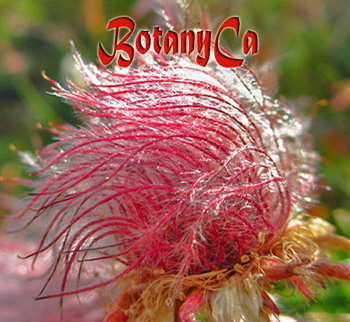
Primula parryi detail

The nice thing about Snowbird is that if you are short on time, the Aerial Tram from the Snowbird Centre it will take you up to the Hidden Peak situated at 11,000 ft. in no time. This will give you plenty of time to take pictures and botanize around. From there, one option is to explore on the trail towards the East Twin Peak. The whole ridge looks like a crevice garden planted with species adapted to the harsh environment, all of them real rock treasures.

Among these, Hymenoxys grandiflora – Old Man of the Mountain (Asteraceae), is an alpine that cannot be missed. Flower stems range from a few inches tall to 10 inches and the big yellow flower heads, are said to face east almost always. Stems and leaves are dense hairy green. Phlox hoodii – Carpet or Hood’s phlox (Polemoniaceae), is a miniature phlox growing on dry, rocky slopes from mid to high-elevations. It forms compact clumps, 6 – 8 inches high, with white to lilac flowers. The leaves are sharply pointed and woolly pubescent. It blooms from May to July depending on elevation.  

Another very bright alpine plant, Eriogonum umbellatumSulphur flowered buckwheat (Crucifereae) – grows about 12 to 14 inches tall and has flowers that are cream to bright, sulphur yellow at the top of sturdy stems.  Leaves are glabrate, green above and pubescent beneath. Although very well known, we are always happy to meet Silene acaulis. The Moss campion (Caryophyllaceae)is usually the special reward for those who climb to the mountain tops, both in North America and Europe. It is a low, densely matted, cushion-like perennial generally less than 2 inches tall. The stems are woody and densely covered with short needle-like leaves. They flower from July to August producing a multitude of small pink blossoms.

Hiking down from the Hidden Peak, in the Little Cloud Bowl, there was still a lot of snow, but we rummaged between rocks and snow knowing that we must find there an elusive Primula: Primula parryi. Parry’s primrose (Primulaceae) is a rather rare alpine beauty that likes to have wet roots, so it is often found in snow-melt areas, alpine streamsides above 10,000 ft. elevation. The thick leaves are disposed in rosettes and supposedly have an unpleasant aroma (that we didn’t noticed). The flowers are a bright magenta colour with yellow centers, produced on a sturdy stem up to 12 inches tall.

A few other interesting alpines presented in the gallery: Androsace septentrionalis, Anemone multifida and Antennaria microphylla. But these are really just a few plant portraits from an area extremely rich in wildflowers, well worth of an alpine ‘escapade’ at the end of July or in August, when there’ll be probably more chances to collect some seeds too.


Ranunculus adoneus

 Just a few more  plant images from our trip to Snowbird in the Wasatch Mountains, Utah.


Clematis colombiana var. tenuiloba

When hiking on the nearby trails doesn’t suffice anymore, we usually set out toward a mountain area to immerse in the richness of alpine landscapes. Two years ago at the end of July, we travelled to Snowbird, situated in the heart of scenic Wasatch Mountains, Utah. Although better known as a ski resort, during the summer, Snowbird offers an easy and comfortable access to some of the floristic gems of the Utah Rockies.

Snowbird in the Wasatch Mts.

Snowbird in the Wasatch Mts.

Wasatch Mountains stretch for nearly 200 miles from the Wellsville Mountains on the north, to the Mount Nebo on the south. Elevations range between 4,200 and 11,957 feet (at Mount Timpanogos). Along with jewel-like lakes there are pockets of lush green mountain meadows and areas of alpine tundra. Climate and microclimate differences produce a broad seasonal flowering spread. The basic rock types are made up principally of limestone and dolomite rocks. Soils of widely varying chemical composition are found throughout the area, thus providing a suitable environment for plants that require either acid soil or lime. These diverse habitat conditions make Wasatch Mountains a hotspot for plant endemism. One place where you can spend the whole day, just basking in the sun and admiring wildflowers is the Albion Basin. It is located at the top of glacially carved Little Cottonwood Canyon, above the ski resorts of Alta and Snowbird at over 9,500 feet. During the summer months of July-August there is a spectacular wildflower display in the high-elevation meadows with natural gardens of paintbrush, columbine, lupine, Jacob’s ladder, penstemons, and many more. This is where the Wasatch Wildflower Festival is held every year.

 A very interesting plant that I saw for the first time was Pedicularis groenlandicaElephant’s head (Orobanchaceae), which grows along streams and boggy mountain meadows, forming sometimes large colonies. It has fern-like leaves, mostly basal and dark green stems of about 1 foot high with flowers that look exactly like little magenta-pink elephant heads. Plants blooming for many weeks offer an image that is hard to forget. This beautiful plant is parasitic on the roots of the plants that grow in its vicinity, from which it extracts the nutrients it needs. Because of the parasitic life cycle, it would be probably very difficult to cultivate.

Another first was Aquilegia coeruleaColorado Blue columbine. It is a columbine with very long spurs and large flowers that can vary in colour from light blue to white (4 varieties in Flora of North America). Usually it grows close to wet stream areas in part-shade, but also can be found on rocky outcrops in full sun. The population we found had almost entirely white flowers. Taking the trail to Cecret Lake and then towards Germania Pass you’ll find a fabulous rocky area hosting Penstemon humilisLow penstemon (Plantaginaceae). It grows in many-stemmed clumps 4 to 12 ft. tall. The flowers are about 1.5 inches long, colored in every shade of blue from lavender to light sky blue and even magenta. Considering that there are more than 60 species of Penstemon in Utah, I have to mention at least a local endemism, the Wasatch PenstemonPenstemon cyananthus, which is common in the area, growing on dry, gravelly hillsides. Each plant produces several 2 to 3 ft. tall stems of magnificent blue flowers. You can definitely get your fix if you have agentian blue craving! We even found two very localized forms with white and pink flowers. Another day, on a hike to the Flagstaff Peak, we lost the trail that starts from the Alta Lodge, but were rewarded to find at the top of the ridge clumps of Clematis columbiana var. tenuiloba – Rock Clematis (Ranunculaceae). This is a rhizomatous clematis with aerial stems that are not viny, usually up to 10 cm tall and tufted. Leaves are typically 3-lobed and the flowers are deep pink to violet. It grows on cliffs and rocky summits, usually in open sites. It is a prized rock garden clematis, hard to find to buy, so this year I’m trying my own seeds (hope they’ll come true!).


Cypripedium arietinum

Orchids of Bruce Peninsula II

I was saying earlier that one could spot quite a few Cypripedium spp.- Lady’s slippers, at Singing Sands National Park in Bruce Peninsula. Tread lightly on the trails, watch carefully and maybe you’ll even meet the lady’s slippers fairy from the image below.

Cypripedium reginae – Showy lady’s slipper; it is usually found in fens and swamps and it’s easy to recognize after the bright pink slipper with a round opening. The pink blushing of the pouch can vary greatly in the populations, from deep pink to even, in rare cases, ‘albino’ individuals. As a complement to the flowers are the beautifully ribbed, wide leaves.

 Cypripedium arietinum – Ram’s head. Easily recognisable after the unusual shape of the slipper (lip), which also has reddish reticulations. It is flowering a bit earlier than C. reginae and parviflorum, so a visit in late May is advisable.

 Cypripedium parviflorum – Yellow lady’s slipper; it is an extremely variable species in regards to flower size and colours. Currently there are 3 varieties recognized in Flora of North America: var. pubescens, var. parviflorum and var. makasin. Personally, I can say that plants growing on drier sites have the slipper usually yellow and larger than those growing in wet habitats (most likely with reddish slipper).

I would strongly advise everyone with the desire and intention of growing orchids in their garden to try to see them first in their native habitat. High prices, of any orchids, are rightly justified by the difficulty to propagate them (mainly in vitro) and the length of time necessary to obtain a flowering size plant (5-7 years). There are many hybrids in cultivation today, which besides interesting flower colours, are said to be more adaptable and faster growing in garden conditions.


Polygala paucifolia - in the Bruce Peninsula, Ontario

One of my goals is to concentrate on the propagation of a few N. American native plants that would be as prized in our garden as any Chinese or S. American novelties. The hype of using native plants in our gardens and landscapes it always cut short by their difficulty to propagate (and by the lack of available seeds collections, of course). Whatever doesn’t fit into the profile of mass-production has been abandoned or perhaps not even tried in cultivation.

Besides serving an ornamental function, expanding into cultivation a few of the hard to find and/or propagate N. American species, would serve also a conservation purpose by maintaining and enriching the genetic material/ biodiversity through sexual propagation.Conservation through cultivation, (aka propagation) has already proved its importance in a few unfortunate cases of species extinct in the wild but saved, at least temporarily, in gardens sanctuaries.

 “No, no! The adventures first, explanations take such a dreadful time!” – Lewis Carroll: Alice’s Adventures in Wonderland

OK. Last year we were able to finally collect a few seeds of Polygala paucifolia –Gaywings or Fringed polygala This is a low growing plant found in dry to moist woods, in part shade. It flowers in May-June and the pink-purple flowers are quite unusual – they have 3 short and 2 long wing-like sepals and 3 joined petals with a frilly crest at the tip. Fruit is a capsule.  The seeds present an appendage – elaiosome, which is associated with ant dispersal – now you see where I’m going? A bit too late and the seeds are gone. The appendage contains lipids, proteins and starch, which serve as a reward for the ants. They drag the seeds to their nests to feed their youngs on elaiosomes and thus provide the service of dispersal. I bet they are very yummy!


 The germination ecology for species from Polygalaceae has not been investigated in detail. I found a study claiming that for P. paucifolia, 4 months of dry storage results in an increase in germination. Other Polygala species are known to require pre-treatments for germination. Anyway, I don’t have that many seeds, so for this year I’ll try two variants: dry storage and moist-cold stratification until sowing in the spring.

 We shall see…the seed adventure continues!

 Note:  Many spring flowers from the temperate climate rely on ants to disperse their seed  (myrmecochory – I wouldn’t try pronouncing this); from the very well known: Trillium, Hepatica, Corydalis, Dicentra…


Aralia hispida fruits

While gazing to the rocky shores of the Georgian Bay in Killarney, one plant kept drawing my attention (and camera) – the bristly sarsaparilla: Aralia hispida. Growing in any small crack of the big granite boulders, with shiny leaves and blackish fruits proudly swinging in the wind, it made me think, again, how many wonderful, garden-worthy, but underutilized native plants are around.

Drought resistant, growing in full sun in rocky, poor substrates, this Aralia could be a prized plant for any garden. The leaves are twice pinnately-divided, and the stem base is covered by bristly hairs and becomes woody persisting through the winter. White-cream flowers appear in June-July in round umbels on stalks that diverge at the end of the stems; they are followed by purplish black fruits resembling a bit the elder fruits (hence the other popular name: dwarf elder). The inflorescences stalks become red, making a nice contrast with the black fruits towards the fall. But enough talk, the pictures are always more convincing…


Not to be confounded with Sarsaparilla – the common name used for various species of Smilax (greenbriers), more particularly for Smilax regelii.