While in the Berberidaceae realm, here’s a post where I outlined as best as possible, the process of growing Podophyllums from seeds from A to Z.
The Chinese Podophyllums (syn. Dysosma), share similar seeds and germination requirements as our native Podophyllum peltatum (mayapple). In all cases, the seeds are enclosed inside fleshy fruits. After the fruits are collected, it is important to extract and clean the seeds right away. This can be a bit unpleasant because the inside containing the seeds is gelatinous (use a sieve and lightly rub the seeds out and rinse, rinse and rinse again).
The sowing must be done right away (Sept./October) or the seeds must be placed in moist vermiculite in Ziploc bags until sowing. The seeds are easy to keep in moist vermiculite as long as were well cleaned; you only have to check the moisture level once in a while (one exception noted for Dysosma aurantiocaule, when the seeds got soft fast (but I had a small lot of seeds and cannot really generalize).
I must emphasize that these seeds are hydrophilic, and using dry seeds to sow, in my opinion, is a complete waste of time.

Dysosma seeds in moist storage
The required cycles for germination are: Light WARM (late fall temperatures)/COLD (winter)
- Sowing outside: the time would be early to late fall. Sow as usual in pots/large containers, water and keep them over the winter in a cold frame. Easy done, no worries!

Podophyllum peltatum, Mayapple, seedlings germinated outdoors showing the cotyledon leaves; they will remain at this stage in the first year and do not need pricking out. Later in the season, they become dormant (do not throw away the pots!)
- Sowing indoors: usually done in the winter/early spring with seeds that have been kept moist and allowed a light warm/cold period. The cold period can be provided in a cold garage/fridge. It is not advisable to use this method unless enough light can be provided for the growing seedlings (light stand, conservatory).
If someone wants to speed up the process, the Ziploc bags with seeds can be taken out of the fridge around late January/February and kept at room temperature; gradually the seeds will start to germinate and can be potted up one by one and placed under the lights.

Dysosma hybrids (pleiantha x versipellis, syn. Podophyllum pleianthum x versipelle) seedlings
Or, leave the Ziploc in the fridge until all seeds start to germinate towards spring (approx. March/April), pot them up and provide adequate conditions until they can go outside.

Dysosma hybrid, seeds germinated in the fridge, April 21
In most cases, only cotyledon leaves will be formed, in other cases the true leaves will appear as well. Usually, Podophyllum peltatum will form only cotyledon leaves in the first season, grow for a while and then go dormant; the Chinese ones are variable, most will form a true leaf. When growing from seeds there is always great variability.
Keep the seedlings in a part shaded place, water and feed lightly. At some point in the summer they may go dormant, especially in very hot weather.
All the seedlings which didn’t form a true leaf in the first year, will do it in the second year. Be patient, like with all other species that form a rhizome. In general, 3-4 years are necessary to obtain a good young plant; they will grow really fast after the root system has bulked up.
Podophyllum hexandrum (syn. Synopodophyllum hexandrum)
The difference in this case is that the seeds are not hydrophilic, so they can be kept dry in the fridge for quite a few years. Of course, when sown fresh (fall), they will germinate in the spring.
For dry seeds, a GA3 treatment followed by sowing at room temperature usually will result in rapid germination, and sometimes most seedlings will present the true leaf (but not always).

Podophyllum hexandrum seedling with true leaf
Important for all species: in the first 1-2 years lots of energy is put into forming the radicular system; this translates in the fact that the seedlings need enough space to develop. So, either sow fewer seeds per pot or transplant them in individual pots as soon as possible (in dormant stage!).
I think my pictures show very well what I mean; learn from my mistakes ;) If you sowed too dense don’t panic; when the seedlings are dormant (in very early spring), shake the soil, untangle the roots gently and pot them in a fresh mix in larger size pots.

Podophyllum hexandrum crowded seedlings after one season growth in the same pot

Podophyllum hexandrum one-year seedlings prepared for repotting, notice the variation in size
Again, there is always variation when growing from seeds; we cannot expect all the seeds, even from the same batch, to grow the same: the collection site, mother-plant, ambient factors, all have an influence in germination & growth of the seedlings. This picture with one year old Dysosma plants shows it very well:

Dysosma hybrid one year old plants, prepared to be repotted in early spring
I hope this will be helpful for all wanting to grow any Podophyllum/Dysosma species from seeds – Happy Podos growing!




Seedless Friday – Compositae
Friday's Seed(s), Plant portraits, PropagationWell, not quite seedless – here’s one image. I didn’t have time to finish what I wanted to do for the Compositae family and, taking into consideration the weather here, maybe it is for the best. We can really use some colours at this time!
Centaurea salonitana seeds
So, just a gallery with mostly Centaurea and few others thistle-like species :)
The names are displayed on mouse hover, or click and browse through the gallery
Centaurea jankae
Centaurea salonitana
Centaurea triumfettii ssp. stricta
Centaurea pseudophrygia
Centaurea kotschyana
Centaurea drabifolia
Centaurea kotschyana yellow form
Jurinea mollis
Echinops crispus
Cirsium purpuratum
Cynara cardunculus var. scolymus
Swallowtail on wild Cirsium
Friday’s Seeds – Boraginaceae
Friday's Seed(s), PropagationI only have a small collection of genera/species from the Boraginaceae family. I must work better at this family, that’s for sure.
Here they are for now: Onosma, Omphalodes, Pulmonaria and something a bit more rare, Craniospermum.
And because species placed formerly in Hydrophyllaceae are now included in Boraginaceae, there is also Hydrophyllum.
For names, hover over images or click to open the gallery
Brachybotrys paridiformis Maxim. ex Oliv.
Craniospermum subvillosum lehm.
Hydrophyllum canadense L.
Omphalodes lojkae Sommier & Levier
Onosma caucasica ssp. oligotricha T.N. Popova
Pulmonaria mollis Wulfen ex Hornem.
Only one species/genus is shown, a couple more species are displayed in the new Boraginaceae page.
Growing Podophyllum from seeds, including Dysosma and Sinopodophyllum
Propagation, Wildflowers of North AmericaWhile in the Berberidaceae realm, here’s a post where I outlined as best as possible, the process of growing Podophyllums from seeds from A to Z.
The Chinese Podophyllums (syn. Dysosma), share similar seeds and germination requirements as our native Podophyllum peltatum (mayapple). In all cases, the seeds are enclosed inside fleshy fruits. After the fruits are collected, it is important to extract and clean the seeds right away. This can be a bit unpleasant because the inside containing the seeds is gelatinous (use a sieve and lightly rub the seeds out and rinse, rinse and rinse again).
The sowing must be done right away (Sept./October) or the seeds must be placed in moist vermiculite in Ziploc bags until sowing. The seeds are easy to keep in moist vermiculite as long as were well cleaned; you only have to check the moisture level once in a while (one exception noted for Dysosma aurantiocaule, when the seeds got soft fast (but I had a small lot of seeds and cannot really generalize).
I must emphasize that these seeds are hydrophilic, and using dry seeds to sow, in my opinion, is a complete waste of time.
Dysosma seeds in moist storage
The required cycles for germination are: Light WARM (late fall temperatures)/COLD (winter)
Podophyllum peltatum, Mayapple, seedlings germinated outdoors showing the cotyledon leaves; they will remain at this stage in the first year and do not need pricking out. Later in the season, they become dormant (do not throw away the pots!)
If someone wants to speed up the process, the Ziploc bags with seeds can be taken out of the fridge around late January/February and kept at room temperature; gradually the seeds will start to germinate and can be potted up one by one and placed under the lights.
Dysosma hybrids (pleiantha x versipellis, syn. Podophyllum pleianthum x versipelle) seedlings
Or, leave the Ziploc in the fridge until all seeds start to germinate towards spring (approx. March/April), pot them up and provide adequate conditions until they can go outside.
Dysosma hybrid, seeds germinated in the fridge, April 21
In most cases, only cotyledon leaves will be formed, in other cases the true leaves will appear as well. Usually, Podophyllum peltatum will form only cotyledon leaves in the first season, grow for a while and then go dormant; the Chinese ones are variable, most will form a true leaf. When growing from seeds there is always great variability.
Keep the seedlings in a part shaded place, water and feed lightly. At some point in the summer they may go dormant, especially in very hot weather.
All the seedlings which didn’t form a true leaf in the first year, will do it in the second year. Be patient, like with all other species that form a rhizome. In general, 3-4 years are necessary to obtain a good young plant; they will grow really fast after the root system has bulked up.
Podophyllum hexandrum (syn. Synopodophyllum hexandrum)
The difference in this case is that the seeds are not hydrophilic, so they can be kept dry in the fridge for quite a few years. Of course, when sown fresh (fall), they will germinate in the spring.
For dry seeds, a GA3 treatment followed by sowing at room temperature usually will result in rapid germination, and sometimes most seedlings will present the true leaf (but not always).
Podophyllum hexandrum seedling with true leaf
Important for all species: in the first 1-2 years lots of energy is put into forming the radicular system; this translates in the fact that the seedlings need enough space to develop. So, either sow fewer seeds per pot or transplant them in individual pots as soon as possible (in dormant stage!).
I think my pictures show very well what I mean; learn from my mistakes ;) If you sowed too dense don’t panic; when the seedlings are dormant (in very early spring), shake the soil, untangle the roots gently and pot them in a fresh mix in larger size pots.
Podophyllum hexandrum crowded seedlings after one season growth in the same pot
Podophyllum hexandrum one-year seedlings prepared for repotting, notice the variation in size
Again, there is always variation when growing from seeds; we cannot expect all the seeds, even from the same batch, to grow the same: the collection site, mother-plant, ambient factors, all have an influence in germination & growth of the seedlings. This picture with one year old Dysosma plants shows it very well:
Dysosma hybrid one year old plants, prepared to be repotted in early spring
I hope this will be helpful for all wanting to grow any Podophyllum/Dysosma species from seeds – Happy Podos growing!
Friday’s seeds – Berberidaceae
Friday's Seed(s), PropagationThis Friday I indulge in one of my favourite plant families; say it out loud – Berberidaceae!
It is a large family and here I emphasize of course, the ornamental side of it. Many known and beloved garden perennials (usually for the woodland gardens) belong to this family: Epimediums, Vancouveria, Achlys, Podophyllums, Jeffersonia, Ranzania, Diphylleia and so on. From the woody species, Berberis and Mahonia are widely cultivated.
What else they have in common, seeds speaking and referring to the perennials, is the fact that in most cases, these are hydrophilic (i.e. do not tolerate desiccation) and so for optimum results they need to be sown fresh or kept in moist storage.
The pattern required for germination in most cases is WARM/COLD, sometimes with multiple cycles (see Caulophyllum).
Hover over pictures for names
Two genera, Caulophyllum and Gymnospermium, present another rarely seen feature in Angiosperms, namely that the ovary walls burst open and the seeds develop and ripen in a ‘naked’ state (they look like fruits, but nonetheless are just seeds). Fascinating.
Gymnospermium altaicum (Pall.)Spach
Caulophyllum thalictroides (L.) Michx.
For more please see the newly published Berberidaceae page, the 10th in line!
I know seeds are boring (but how else can we obtain plants?), so here are few plant pictures, mostly to show species I don’t have seeds yet: Vancouveria hexandra, Achlys triphylla, a nice, fat Dysosma and a hybrid Epimedium raised from ‘Amber Queen’ seeds (hybrid). For others like Caulophyllum, Jeffersonia, Podophyllum…I already showed pictures many times and they are also featured in the Seeds shop.
Vancouveria hexandra, garden cultivated; the fruits and seeds are very close with those of Epimedium.
Achlys triphylla, Vanilla leaf (Deer foot) in wild habitat, Victoria Island, BC.
Dysosma versipellis (syn. Podophyllum versipelle) at Butchart Gardens, BC
Epimedium ex. ‘Amber Queen’, a 3-years old plant flowering in my garden (for Epimedium only hybrids will be obtained when growing from seeds)
Only one more picture, more for the purpose to emphasize the name that should be used for Jeffersonia dubia – guilty of charge myself; I’ll try to go the right way from now on.
Plagiorhegma dubium (syn. Jeffersonia dubia)
Additional pictures will be posted later on FB in order to save space here on the website.
Fridays Seeds in lieu of flowers – Pulsatilla
Friday's Seed(s), PropagationI don’t remember if I’ve already done a Friday’s seeds about Pulsatilla; in any case this is more to draw attention to the Pulsatilla species from the shop.
There are not many, but all are fresh of this year and this is the best time to sow!
See them here in the Pulsatilla category.
I don’t have many pictures of these gorgeous species, reason why I have to show the seeds. I know they are not as attractive as the flowers but what can I do, and in any case, they can be used for ID purpose.
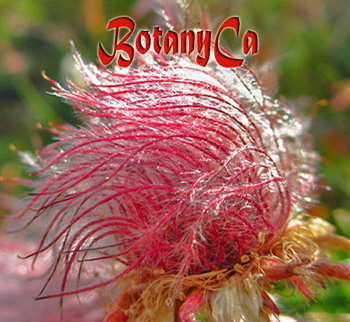
Pulsatilla albana ssp. armena – the Pulsatilla ‘seeds’ are actually fruits – achenes with “fluffy tails”.
Pulsatilla vernalis
A good idea is to admire pictures while also reading advice on their germination at the same time – all on the Scottish Rock Garden forum! This is the link to Pulsatilla 2013 thread, but there are more topics on Pulsatilla: http://www.srgc.net/forum/index.php?topic=9988.0
Note: I’ve already sown my batch (I have to practice on this genus) and there are few leftover seeds of Pulsatilla alpina var. alpina, which will come attached as a gift to the first order containing other Pulsatillas.
Pulsatilla alpina ssp. alpina (large, white flowers)
While talking Ranunculaceae seeds that need to be sown asap, I recommend to also have a look at Adonis vernalis.
Winter getaway – Dobrogea II
Botanical travels, Plant portraits, PropagationContinuing the Dobrogea I with other species which call this particular and beautiful region home.
I hope you already got a taste of it; this should make it easier when growing some of these species from seeds and also help selecting the garden location.
First a mention for two endemic species:
Campanula romanica:
Campanula romanica growing on a lichen covered rock outcrop, North Dobrogea, Romania
Centaurea jankae: a species with few populations known only to exist in Romania and Bulgaria. Good luck (and broken stems by wind/animals) made it to find a few late flowers to photograph.
Centaurea jankae
Remembering the sunny days of past summer, the flowers, the rocks and wildlife:
Stachys atherocalyx, very similar with Stachys recta that I offered seeds from Carpathian Mts.
Stachys atherocalyx
Hedysarum grandiflorum, as well just one late flowering stem was waiting to be immortalized :)
Hedysarum grandiflorum
Hedysarum grandiflorum habitat
Convolvulus cantabrica, perfect in a rockery and probably hardy in our area (Ontario) with reliable snow covered. I have a two-year old Convolvulus tragacanthodes growing in the rockery, we’ll see how it comes out from this winter.
Convolvulus cantabrica in wild habitat
Cephalaria uralensis
Cephalaria uralensis
The Dobrogean tortuga for a variation
Dobrogean tortuga, Testudo graeca
Thymus zygioides, found growing in the company of Paronychia cephalotes
Thymus zygioides
One more view from Macin Mts.
And a little lizard (Lacerta) basking in the sun
There were many other species of course; maybe more to follow when the next wave of arctic air hits us!
Fridays Seeds and much more about the fuzzy wild bean – Strophostyles
Friday's Seed(s), Wildflowers of North AmericaI wanted something special for this arctic day and the woolly seeds of Strophostyles helvola are just perfect; I will stress again the woolly :)
Strophostyles helvola coiled pods and seeds
Strophostyles helvola, trailing wild bean (or amberique bean) is an annual vine native to eastern Canada and the US; the pea-like flowers are light pink/lilac and they form pods very similar with those of Phaseolus vulgaris; the pod coils when it dries up to release 4-8 woolly seeds.
The stems will trail on other plants, or if not, will inter-twine with each other on the ground, just like Amphicarpaea bracteata does (google images).
This species has had various medicinal uses for the Native Peoples, and there are also indications that the seeds were used as a food source; they were found in a few archeological sites in NA.
Those interested can read more about this in the curriculum of the Advanced Paleoethnobotany Seminar from Washington University: https://pages.wustl.edu/fritz/strophostyles-helvola-l.-elliot
And, while talking wild foods, it’s winter so new ideas are always welcomed – have a look at this article which recommends other edible species found on the coastal habitat (same where Strophostyles can also be found):
https://ncseagrant.ncsu.edu/coastwatch/previous-issues/2011-2/summer-2011/coastal-wild-edibles-stalking-the-wild-sea-lettuce/
What about: amberique-bean humus with cattails au gratin?
Go foraging this year! :))
Winter getaway – Dobrogea I
Botanical travels, Plant portraits, PropagationWell, the trip interruption was a bit longer that I would have wished, but here we are on the road again (see first part of the trip here). In order to beat the polar vortex that descended upon us we need sun & flowers!
As I said, the drive from Southeastern Carpathians to Dobrogea region is not very long, depending on the destination it can take 4-5 hours. The Dobrogea region (with Dobrogea Plateau) in Romania is surrounded to the north and west by the Danube River and to the east by the Danube Delta and the Black Sea. Most visitors are aiming for the Black Sea sand beaches, bird watching and/or fishing in the Danube Delta, and very few aim to enjoy the particular flora of the region.
Given its position, the climate is slightly warmer and more arid than in the rest of Romania, winters are cold but with less snow and the flora is very specific with a combination of endemic plants and various species at their geographical limits. It is a special ‘meeting’ place for species of Mediterranean, Eurasian and even Caucasian origin!
Even if in late July it is very hot and dry and many species are at the end of flowering, there is still a lot to explore. I will start with a few Caryophyllaceae to keep the continuity and then show various other species.
Dianthus nardiformis is an endemic of this region and luckily being a late flowering species it was still very showy; photographed on the dry, exposed, rocky hills of Enisala fortress and everywhere else. Striking especially when dispayed against the lichens laden rocks.
Cultivated for a long time, this Dianthus makes for a good garden plant, although not as tidy (foliage speaking) as other species, but extremely floriferous, hardy and long lived. There is an impressive specimen at Montreal Botanical Garden to testify it.
Dianthus nardiformis
On the same dry, rocky hills surrounding Enisala fortress, it was a nice surprise to find Paronychia cephalotes. I have a young plant grown from seeds of Crimean accession in the rockery, and I look forward to see it flowering. However, seeing a species ‘perform’ in the wild is always much better!
It is a mat forming species with white, papery bracts posing as ‘flowers’. It is hard to think it belongs to Caryophyllaceae at a superficial look.
Paronychia cephalotes and Thymus zygioides, Dobrogea July 2017
From the neglected genus Minuartia, I will note Minuartia adenotricha, a species that you will also found on the other side of the Black Sea, on the Crimean mountains.
Minuartia adenotricha, Dobrogea 2017
Gypsophila pallasii is a similar species with G. glomerata offered in the seeds shop (as well of Crimean origin); doing very well on the dry, rocky substrate in the company of Echinops, Artemisia, Xeranthemum, Astragalus, Allium ssp. and many others.
Gypsophila pallasii at Capul Dolosman, Dobrogea 2017
A must have stop for plant lovers in Dobrogea are the Macin Mountains located in Tulcea County. These are among the oldest mountains in Europe, formed during the Hercynian orogeny with the predominant rock – granite, but also sandstone limestone. Their specific look is given by the eroded granite formations.
Although a very, very long time ago these mountains were taller than the Carpathians; today the highest point is Ţuţuiatu/Greci Peak with an elevation of 467 m above sea level.
Macin Mts., Dobrogea, Romania
In the quite dry-looking landscape of late July, Silene compacta stood apart with its rich magenta inflorescences. It is not difficult to assume that full sun locations and super good drainage would be mandatory for its successful cultivation.
Silene compacta in Macin Mts.
Many other interesting species grow in the particular habitats of the Dobrogean plateau.
Winter getaway – Dobrogea II
All Violas in one place
Propagation, Wildflowers of North AmericaTo finalize the query about the new Viola I was talking last week, pictures of seeds were taken (more detailed than usual): size, surface, colour, aril size and aspect are all useful characters for identification.
Viola cf. declinata seeds
Unfortunately, not having a term of comparison the identity is still uncertain. So, until I grow a few plants it will be offered as Viola cf. declinata.
While at it, why not see about other Viola spp. seeds? And, of course, why not have a Violaceae page in the Seeds Library? Have a look and notice the subtle differences between Viola renifolia and Viola macloskeyi seeds (these two native species are a bit hard to differentiate).
And how about a Viola category in the seeds shop? :)) On this occasion, I ‘discovered’ I forgot to add the Viola pubescens, as well as Viola jooi seeds to the inventory.
It’s so good to have everything in one place!
Back to normal and a Viola
Plant portraits, PropagationThe Seeds Shop activity is back to normal; special thanks to those who placed orders and waited patiently!
About the Viola
Last day in the Carpathian Mts. this summer was dedicated to revisiting a special place, no seeds collecting in mind, just pure enjoyment of the scenery.
Going up a narrow rock ravine to join a narrow terrace grass trail (known as “brâna”) I snapped a few pictures, which included a Viola and then kept going. On the return, I stopped to collect Aquilegia nigricans seeds and also took on the fly some from the mentioned Viola thinking it would be nice to grow it in the garden together with Polygala vulgaris, like in nature.
Viola cf. declinata, and Polygala vulgaris – Bucegi Massif, August 2017
I didn’t know on the spot which species it was, so I should have taken proper pictures for ID. But we know about ‘should and would’….
Taking into consideration the site, flowering period and flora of the region, it is very probably to be Viola declinata.
Another option is Viola tricolor subsp. saxatilis (syn. subsp. subalpina).
Close up pictures of the seeds may have a final say on this; or not…To follow…
*Allium thunbergii ‘Ozawa’ and Gentiana cruciata seeds were added to the inventory.
Winter getaway – Caryophyllaceae part I
Botanical travels, Mountains, PropagationFollow-up to Friday’s seeds – let’s go up the mountains and then travel to the Dobrogea region (close to the Black Sea, Romania) to see a few Caryophyllaceae.
I’ll start with Arenaria; yes, usually not overly ornamental plants but easy to please and cheerful when in flower. Arenaria ciliata shown below; another Arenaria found at high altitude is A. biflora.
Arenaria ciliata at about 1100 m alt.
Cerastium alpinum ssp. lanatum, the alpine mouse-ear, can be found at alpine level in quite a few mountain ranges, not only in the Carpathians; it grows on rock crevices, nooks formed between boulders, also on stabilized rock screes and alpine meadows. It is quite adaptable and the woolly foliage makes a nice addition to the large, white flowers; something good to try for any ‘not that advanced’ rock gardener (myself included).
Depending on the traveling time, there are always various Dianthus species to admire from the alpine level to the foothills of the mountain, like D. petraeus, D. tenuifolius, D. carthusianorum and D. glacialis, to mention just a few. Over the years I’ve presented and offered seeds of some of them, except D. glacialis.
Dianthus glacialis
Gypsophila petraea, a cushion forming alpine baby-breath, endemic for Carpathian Mts. usually grows on conglomerate boulders and crevices on the rock walls; often in localized areas. Excellent species for rock gardens and not difficult to grow based on from my previous experience; unfortunately, most of the capsules were immature and I found very few seeds.
Gypsophila petraea; in the image below with Asperula
Moehringia is an overlooked genus in my opinion. I like Moehringia muscosa for its fine texture and although I didn’t have a shaded rock crevice to offer, it did quite well this summer in my garden in a less than favourable position (‘protected’ by Primula sieboldii). The picture in the wild was taken in Barsei Massif (also part of Carpathian Mts.).
Moehringia muscosa
Moehringia muscosa – garden
Quite a few Minuartia species grow at alpine level and lower; among them, Minuartia verna, the spring sandwort is a rewarding, easy to grow species so don’t be shy to give it a try.
Two cushion forming species of Minuartia from the Bucegi Mts. would be worth having in a rockery: Minuartia recurva and Minuartia sedoides. Especially M. sedoides looks similar to Silene acaulis, but of course that the flowers, when present, signal the different genus. Sometimes they grow interlaced with one another and it is even harder to distinguish them.
One year I must make a special effort and collect seeds of these species.
Minuartia sedoides with yellowish flowers, Silene acaulis and rosettes of Primula minima
Minuartia recurva
I previously showed and probably everyone knows Silene acaulis (first image in the gallery). I’ve also shown with other occasion the cute Silene pusilla (now growing in my garden as well :), so please browse through the gallery to get an idea of the habitats these species are growing in (click to open full size images).
Most pictures are from the Bucegi plateau (alpine level). The ‘green’ boulders’ composed of Silene acaulis, Minuartia and other cushion species, which punctuate the barren rocky areas, are in fact small plant communities. The cushion-type plants are colonizers of these harsh habitats on rapidly draining rocky/sandy soils, and thus very important as pioneers for the installation of other alpine species.
Here’s one more good example with Minuartia sedoides and Primula minima taking good roots in the partly decomposed cushion.
Minuartia sedoides with Primula minima
I didn’t mention Sagina, Scleranthus and probably few others but it’s time to come down the mountain. From the South-Eastern Carpathian Mts. to Dobrogea region there is about a 4 hour drive; it won’t take long to get there – stay tuned…
Friday’s Seeds – more Caryophyllaceae
Friday's Seed(s), PropagationA few images recently added to the Caryophyllaceae page on the Seeds Library – all species collected this summer in the Carpathian Mts. and Dobrogea region, Romania.
In general, species from Caryophyllaceae family are easy to grow from seeds and some (for example, think Dianthus, Silene) may even flower in the first year.
Pictures with various Caryophyllaceae showing the habitats they grow in, will follow this weekend. Stay tuned, I’ve prepared many pictures – the time for winter getaways has come!
Cerastium alpinum ssp. lanatum- alpine mouse-ear
Gypsophila petraea
Silene compacta