Slowly, as I have the chance to try more species myself, and/or find reliable info, I work on making updates for the germination requirements on the Seeds shop. I already mentioned about Sanguinaria canadensis.

It is easy to ‘get lost in translation’ when reading about various types of morphophysiological dormancies, but a short summary for species from temperate regions that require warm/cold cycle for germination will be as follows:

This dormancy breaking requirement is naturally fulfilled by summer (high temperatures) followed by fall (lower warm temperatures) and winter (cold stratification). Note the need of high followed by low(er) warm temperatures.

Because of the collecting/shop logistics and peoples habit of buying seeds in late fall, this means that such species, when sowed in late fall/winter will need the whole next season to undergo these requirements, although otherwise they would not qualify in the ‘2 year germinators’ category.
So it goes: changed from require ‘cold stratification’ to ‘warm – cold stratification’:

Hydrophyllum virginianum
Hydrophyllum canadense
Aralia racemosa
Prosartes lanuginosa (moist packed seeds available this fall I hope)
Ilex verticillata

Hydrophyllum virginianum seedlings, seed sown fall 2015, too late for the warm treatment, germinated this spring (2017)

Prosartes lanuginosa: seeds sown after collecting in early September 2016 – germination right now (I only had about 9 seeds)

Other warm/cold germinators that we already know about and I already posted pictures (many require moist storage): most Corydalis, Allium tricoccum, Asarum canadense and europaeum, Saruma, Anemone quinquefolia and A. nemorosa, Dicentra (D. formosa in the featured image), Thalictrum thalictroides, Jeffersonia, Hepatica….

Corydalis nobilis seedlings

Easy to grow in the garden and from seeds, this North American Geum is an absolute a delight!  An unpretentious, care free plant in most locations; sun and good drainage required. Best when planted in large numbers for the ‘smoky’ effect of the feathery seed heads (Prairie Smoke ;) in the summer.

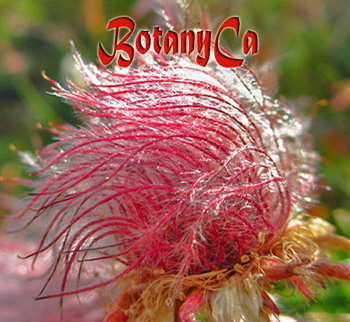
Geum triflorum – Prairie Smoke, Old Man’s wiskers; rosy-red, nodding calyces/flowers, followed by feathery seed heads; the compact, ferny looking foliage will become reddish in the fall.

Propagation from seeds: I did a whole bunch last year – sown in the fall and left outside (cold/moist stratification) and the germination was excellent; I planted the seedlings in the garden by late fall.
The grown up clumps can be easily divided every few years.

Note: Other sources indicate sowing at warm.

Geum triflorum seeds head

…is that the seeds can have two types of morphophysiological dormancy (after Baskin & Baskin):

  • In the first case the roots will emerge in late fall after a warm stratification and the shoots growth will begin in the following spring (= after cold stratification); deep simple epicotyl dormancy.

Sanguinaria canadensis: seeds sown in summer 2016 – complete germination April 2017

  • In the second case (said to occur in about 49% of seeds according to a study), the shoots growth will begin in the second spring after sowing; deep simple double dormancy.

Sanguinaria canadensis: seeds sown in late summer 2015 – complete germination in 2017

The lots of seeds shown were collected from different sites, and I wonder if this was also a decisive/only factor in displaying the different types of dormancy. It is well known that the germination dormancy traits have a genetic component.

Temperatures in the summer/winter may also have role; to be sure I will try to repeat the sowing with seeds of both populations/at the same time. It would be nice to know and collect seeds from certain populations knowing they will germinate in the first year after sowing.

Note: To be clear, for Sanguinaria we are only talking about fresh/or moist kept seeds.


Nothing is better for stress relief than sowing or transplanting seedlings. More than this, I had the perfect seedlings for the purpose – of Rhodiola sachalinensis.

Rhodiola sachalinensis and other Rhodiola species, particularly R. rosea, have long been used as traditional medicinal plants in Asia and Eastern Europe for various ailments, and they have been categorized as adaptogen plants, similar to the better known ginseng species. Besides this, they make for excellent rock garden plants.

Rhodiola sachalinensis grows wild in the mountainous regions of China, Japan, Korea and Russia (Altai region). Unfortunately, it is a dioecious species and the ones that survived from a batch of seedlings started 2 years ago, turned out to be all male plants at flowering.

So, I sowed a few more seeds and I will keep all the transplanted seedlings hoping that at least one will be female. Some were a bit more robust and already showed the nice, thickened caudex; I couldn’t abstain taking a picture:

Rhodiola sachalinensis seedlings

Rhodiola semenovii will have to wait to be sown next year, and I don’t have a picture of it, but here it is Rhodiola rosea in its wild habitat (Carpathian Mts.)

Rhodiola rosea


My intention was to write a longer post detailing the germination/seedlings growing of a few Chinese Podophyllum species, but by the time the evening came the desire to do that has vanished.

As a proof of my good faith I will let you admire last year’s Podophyllum delavayi seedlings. Last year by this time they were like this:

Podophyllum delavayi seedling, March 24/2016

And today, when I ‘performed’ an emergency repotting, like this:

Podophyllum delavayi – one year old ‘seedlings’ sharing the same pot

Podophyllum delavayi one-year old – showing extensive root system

It was a good intention though…

The first Arisaema of the season – in love all over again… 

Arisaema fargesii seedling


Winter is a black & white season in this part of the Northern Hemisphere. I patiently await for the invention of suitable glasses that would project on my retina sunny, flowery images all day long.

Meanwhile, I use my indoor light stand as an indoor garden. It is bright and I get to wear sunglasses that adjust to my desired colour*. Today I have chosen pink for Incarvillea (various species, all commonly called Incarvillea or hardy gloxinia).

Hardy gloxinia species belong to the so called ‘warm germinators’ (will germinate at room temp.). They are also easy to grow indoors and, like many other tuberous species, will benefit from an early start, having more time to develop a good size tuber by late spring when they can be planted outside. Some may even flower in the first year, like it happened with I. delavayi. I have already grown from seeds I. delavayi and I. zhongdianensis.

Incarvillea delavayi, a first year seedling flowering

Incarvillea zhongdianensis, a mature plant (alas, not in my garden)

This year I am happy to start two other species: I. mairei and I. younghusbandii. These are smaller species height-wise, the second a real dwarf, but with larger deep pink/magenta flowers; this combination gives them an even more exotic look for our Northern Hemisphere gardens.

Incarvillea mairei, a relatively young plant

Looking at the world through pink sunglasses in late January is pretty amazing!
Then, there will be days for yellows, blues in many shades, purple, orange…

I. younghusbandii – click for google images.

*Such sunglasses of course, do not exist; except in my imagination.

Here’s a very, very short list of others ‘warm germinators’ that can be started early and will grow well under lights indoors.
Anthemis, Arisaema,
Astragalus, Anthyllis
Anthirrhinum, Iris*
Biscutella, Calycanthus
Oxytropis, Sanguisorba, Roscoea
Scabiosa, Hypericum,
Draba, Allysum
Campanula*, Dianthus*, Lilium*
Agastache, Primula*,
* not all species

also, see update from Feb.8

How the moist stored seeds of C. nobilis are looking at the moment. This is the first time I have ‘excess’ seeds and it is interesting to see how they ‘behave’.

The growth of the embryos has resulted in the expansion of the endosperm and splitting of the seed coat. This is not happening in many species and has been reported as well in Corydalis ambigua; I also noted it in Hydrastis canadensis last year (see below).

Corydalis nobilis seeds with enlarged endosperms (January – seeds in moist storage)

Hydrastis

Hydrastis canadensis seeds with split seed coats by early January (germination in April)

These type of seeds, which have an undeveloped embryo when ripen, require warm stratification before embryo growth can occur in late autumn. The root emergence, followed shortly by the cotyledons, will happen then in early spring (somewhere in mid-March-April).

If I’m not wrong, that’s when I expect to see the ‘little lords’ showing up!

UPDATE – Feb.8

I was wrong! – by second week of February I spotted the first radicles!

Corydalis nobilis – germination start

It continues to be very gloomy here, so a bright and sunny picture will do us all good :) And, I repeat again because not many are mentioning; besides being very hardy and beautiful, the lord of the Corydalis is also fragrant!

Corydalis nobilis

Warning!
Germination of Corydalis nobilis from dry seeds it is so poor (better said maybe non-existent), that’s not even worth trying it.

Growing from seeds is always full of surprises, especially for first time sowings, like in this case for Iris pumila.

Iris pumila – a dwarf, early spring flowering, bearded Iris with a wild distribution from Central Europe to the Caucasus. The large flowers can be violet, blue, purple, yellow, or in various combinations like it naturally happens in wild populations; it is super hardy and excellent for the rockery, or a sunny border.

For best germination, most sources suggest soaking the seeds and providing about 4 weeks warm and then a longer (few months) cold period. So, my plan was to keep the sowings the furnace room for 3-4 weeks (+/- 23C day/ 17C night) and then place the pots outside under snow for the remaining of the winter. I sowed on Dec. 19th – and a couple of days ago (Jan. 5)…surprise! I found some pots with the first shoots were out. The plan has changed of course, and my light stand will be up very soon :)

Iris pumila – seeds soaked, sown on Dec.19th at warm – first signs of germination Jan. 5th (few even sooner)

The pots contain seeds of differently coloured specimens, although this little Iris can provide even more surprises colour-wise!

I don’t know if the seeds will germinate in the same way after going into a deeper dormancy, but this is still a good time to sow – and few fresh seeds are still available in the shop!

You can apply the same technique for growing the Asian counterpart of our Jeffersonia, Jeffersonia dubia. 

I’ve repotted some fine young Jeffersonia seedlings two weeks ago and now it took me a great pleasure to write this post (year 2016 :). Jeffersonia diphylla (Twinleaf) is a wonderful NA species that should be mandatory for all gardens; the pictures show it in its glory at Aspen Grove Gardens.

A delight from early spring (April) to fall, and notice that although it is a woodland species, it can be grown with a fair amount of sun. At least sun in the spring when it flowers it is best.

Just like other bulbous/tuberous species that form rhizomes, Jeffersonia species need 2-3+ years to develop their root system before they will start flowering. The faster & better their rhizome grows, the sooner they will flower. Again, it is very easy to underestimate the size of a seedling root system. This is why the repotting is very important and can be done either in the fall or spring. Each period has its pros and cons, also depending on your winter storage possibilities.

 I will outline the whole process from sowing to repotting the seedlings:

  • Sow the seeds as soon as possible after collecting/receiving them. Otherwise, they have to be keep in moist storage at room temperature during the summer, and then in cold/moist storage. One observation is that these seeds don’t keep too well in moist storage, and they are usually available (if) for a short period.
  • Sow as usual in individual pots or use my ‘space saving method’ – also very practical for someone who doesn’t want to have one pot sitting around by itself. Sow all the seeds in one larger pot and ‘plant’ the pot in the ground (in late fall I added some mulch on top, removed in early spring).

Tip: ‘plant’ the pot close to a shrub/tall perennial plant that will shelter and shade the seedlings; also close to the house so you won’t forget about it (the seedlings require extra watering during dry spells). Mine was close/beneath an old Peony, unfortunately I don’t have a picture.

  • The seeds are germinating somewhere in May, depending on the locality and have very good germination capacity. Foliage wise, not much will happen the first season besides the one shoot with the cotyledon leaves. But keep in mind that underground the root system keeps growing!
Jeffersonia diphylla seedlings

Jeffersonia diphylla seedlings

  • Use a diluted fertilizer once in a while (only if you remember…), water regularly; nothing else to do till late fall.
  • By late October- early November watch for signs of dormancy and let the pot dry out a bit.
  • If you want to transplant them in late fall, tip off the whole content and gently separate the seedlings (don’t forget to congratulate yourself, take pictures, eat some chocolate/cake…)
jeffersonia-diphylla-one-year-seedlings-in-late-fall

Jeffersonia diphylla: one-year old seedlings ‘extracted’ from the pot

  • Repot them in a fresh potting mix (I don’t have any ‘special’ formulas); one or more seedlings/pot. Planting 2-3 seedlings/larger pot will make a ‘clump’ faster.
jeffersonia-diphylla-one-year-seedlings-in-late-fall1

Jeffersonia diphylla seedlings showing an extensive root system after one season of growth and a well formed bud.

  • Water well, and if it’s late November, that’s all they need.
  • Winter storage for the pots: in a cold frame, or again, ‘plant’ the pot(s) in the ground and throw mulch/few leaves on top.
jeffersonia-diphylla-repotted-one-year-seedlings

Jeffersonia diphylla: repotted seedlings ( I have 2-3/pot)

  • Another good option is to transplant the seedlings in the spring or grow them one more year in the same pot; this way the seedlings will be larger in size and easier to handle, especially for those who are not used with transplanting little seedlings.

Young Jeffersonia diphylla plants in late April.

Waiting for the first flowers in 3-4 years! Until then, both species have a very nice foliage, colorful in early spring, then with interesting leaves.

Special thanks to Robert Pavlis @ Aspen Grove Gardens, for growing this beautiful, ‘photogenic’ species and providing the material for this post, i.e. the Jeffersonia seeds :)

Update: More on Jeffersonia germination

A rainy day, perfect to show my young Chinese Podophyllums: Podophyllum delavayi and P. pleianthum x versipelle. They don’t like the cold very much but surely enjoy the moisture whenever possible.

podophyllum-delavayi

Podophyllum delavayi

The few that I manage to transplant in larger pots in early summer, obviously fared better than the ones left in small ones. This is happening with all rhizomes forming species, which need large pots in order to develop well. Note taken of the ‘thorny’ problem of quantity over quality…

podophyllum-pleianthum-x-versipelle

Podophyllum pleianthum x versipelle

Talking Chinese Podophyllum spp., I have the chance to show a ‘freshly’ taken image with seeds of P. aurantiocaule ssp. aurantiocaule.

podophyllum-aurantiocaule-seeds

Podophyllum aurantiocaule ssp. aurantiocaule seeds

Interesting to see how different the seeds are comparing with others (see in the featured image germinated seeds of P. pleianthum x versipelle). This species belongs to Section Paradysosma and it said that combines the leaf shape of Sect. Dysosma (P. pleianthum, versipelle…) with the floral characters of Sect. Hexandra (P. hexandrum). The seeds are very similar with those of P. hexandrum, that’s for sure.

Looking fw to see the ‘youngsters’ next year!!!

And…I have few seeds to spare for those interested, enter the shop here: Podophyllum aurantiocaule ssp. aurantiocaule

Germination for all: clean the seeds from the fleshy fruits and sow right away (late fall); or place the seeds in cold/moist stratification and sow when they show signs of germination (early spring).


Fall has officially arrived and I thought it would be wise to start doing what I call my ‘petit inventory’ :) Lots of seeds have been sown this year and many have germinated. As usual, some seedlings have perished, while others have grown well; a few have been planted in the ground, and some are even flowering! (see Iris dichotoma and Scabiosa caucasica).

An inventory always helps me remember what I’ve grown during the year and it adds to the experience. In most cases, the inventory entails only 2-3 plants, or worse, 1 – truly ‘petit’! I will show a few from the alpine section for now.

Few Caucasian species are my joy and pride: Potentilla divina, Astragalus levieri and Eremogone lichnidea.

potentilla-divina

Potentilla divina a bit difficult to grow, I hope to get it through the winter

astragalus-levieri

Astragalus levieri – a high altitude species, easy to germinate but usually hard to establish; the young seedling was planted in the ground in May

eremogone-lichnidea

Eremogone lichnidea – another new species, I left them as they were in the seeding pot (some alpines react well to this treatment)

As well other species, like Silene jailensis and Paronychia cephalotes, have exceeded my expectations. I also have good hope to finally see the alpine thistle – Carlina acaulis, established in the rockery (seen in the Silene background).

silene-jailensis

Silene jailensis (a Crimean collection) – seedling planted early outside

paronychia-cephalotes

Paronychia cephalotes – another new one, the seedlings were looking so nice that I was afraid to prick them out and planted the whole seedlings pot in the ground.

As you notice, I have continued my experiment of planting asap very young seedlings in the ground, and it has proven again to be the better way to go, at least for me. They can have the roots going deep down fast and establish well throughout the season, while the ones left in pots are more difficult to manage water-wise, plus that the pots are not deep enough for their liking.

In the feature image: Artemisia umbelliformis (Alpine wormwood), another little alpine gem I’m happy to see doing well.

Next to come – the Chinese Podophyllum babies from the shady section!